DIY Wedding Dress – Toiling and Fitting

In the first blog I showed my design choices and where I sourced my fabrics. Here I’m aiming to show the fitting process and all of the tweaks necessary to get to the fit to be the best it could be (there’s no such thing as perfect). I had originally planned to show construction in this as well, however it has got pretty long!

Resources

A couple of essentials for me which allowed me to diagnose fit issues, redraw things and not lose my marbles were:

  • The Complete Photo Guide to Perfect Fitting – Sarah Veblen. This really allowed me to get some ideas of where things were going slightly awry, helping me to identify a short torso, how to fit the sleeves and get a good start on what I needed to do.
  • A see through french curve, to help redraw lines
  • Tracing paper, so I didn’t have to keep buying the pattern repeatedly. As it wasn’t available to buy in PDF format
  • Old bedsheets, calico fabric etc for the toile.
  • Fabric pens to draw balance lines on the toiles
  • Sewing friends with the patience to answer questions and challenge or confirm what I think!
  • The Elisalex Bodice fitting course, I managed to sneak onto this in December 2020 at the New Craft House after it had been lockdown cancelled in November. I had got most of the way, but going on the course helped me to make the final adjustments to make the pattern sing!

Toiles, toiles and more toiles

I’m a big fan of toiles in general, I’m fairly short and (thanks to the wedding dress) now know my neck to boob distance is pretty short. When I make trousers there’s often a quick bedsheet version too to check my rise.

Toile 1

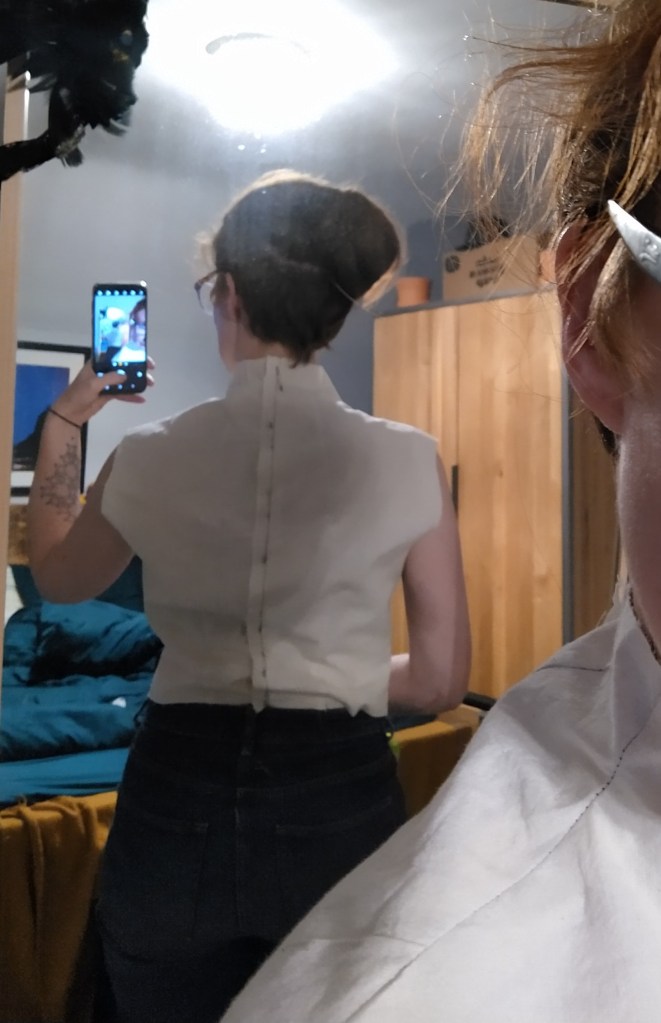
Make the bodice with no edits. The pattern helpfully came with 4 different cup sizes (A,B,C &D). I measured by high bust and my bust, the difference was 5cm so I picked the B cup for the first attempt. From my measurements I also initially went with the size 12, grading to a 14 at the waist.

The issues with this were:

  1. The apex of my bust was significantly higher than it should have been on the pattern. Aka. my nipples were about 1.5 inches higher than the bust line on the pattern.
  2. Similar issues with a large amount of fabric pooling at the back.
  3. My shoulders were not sitting on my shoulders
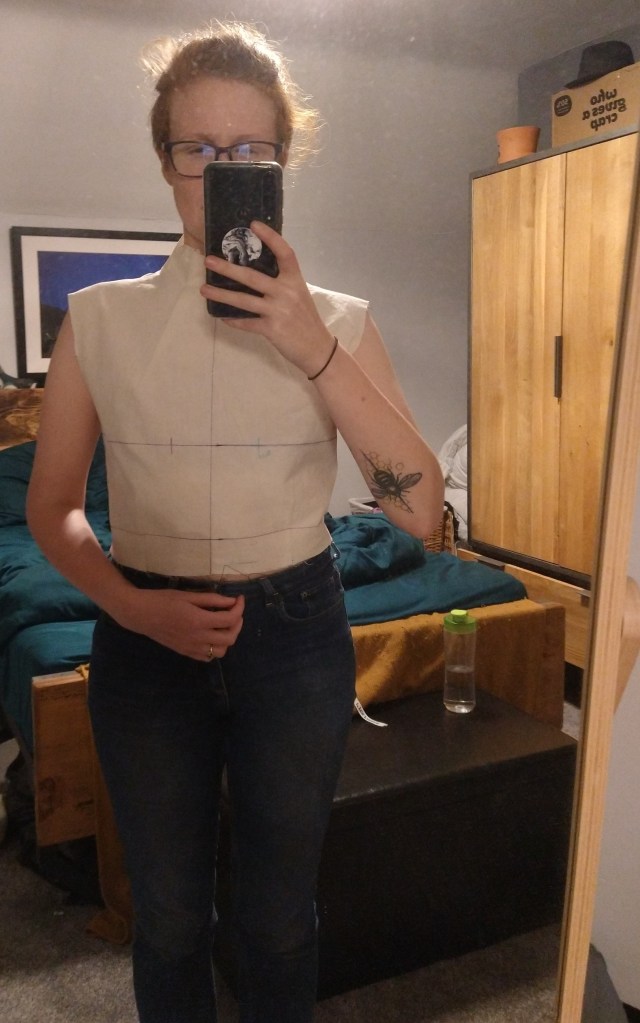
Toile 2

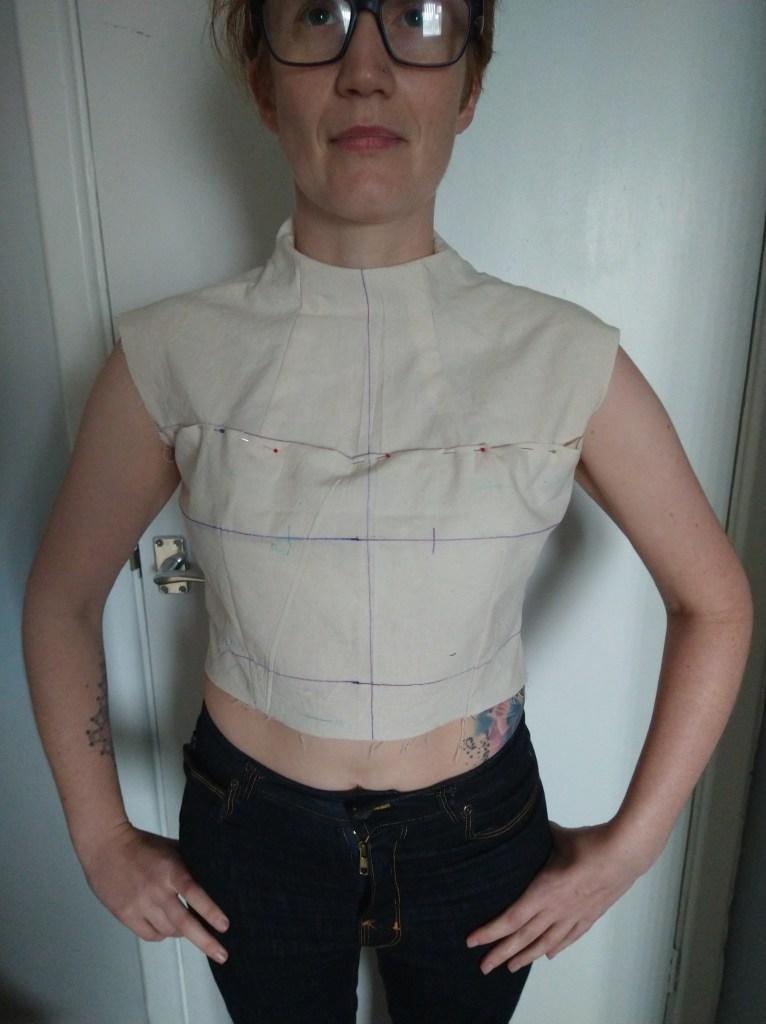
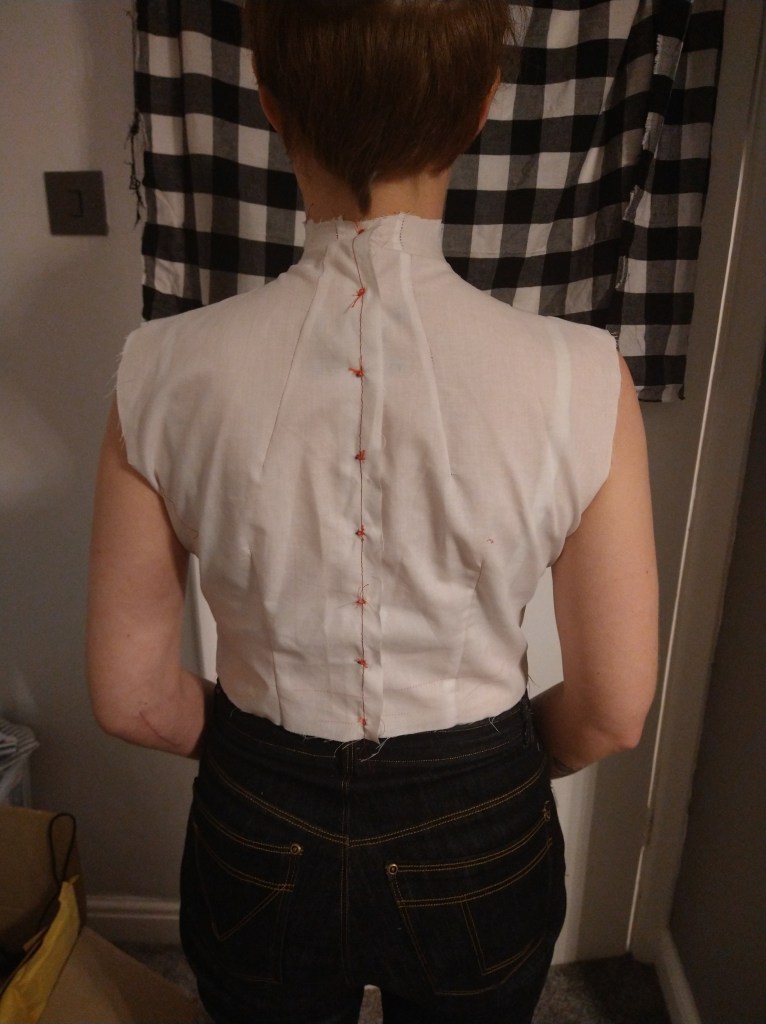
The shoulder to bust distance was taken out and the armhole was redrafted as well as making a 1.5cm narrow shoulder adjustment. 

  • This wasn’t the most successful of my toiles as I had actually done the correction wrong. You can see how tight the neck is in this toile, what I did was also rotate the pattern piece whilst adjusting the shoulders. This was incorrect as the neckline was not gaping and therefore did not need pivoting, what I should have done and did in future toiles was just decrease the length of the shoulder seam by 1.5cm and then reconstruct the armhole.
  • The darts at the top were incorrect, I had tried to shorten them and was unsuccessful in my attempt.

For a fuller explanation of what I have tried to explain about the narrow shoulder adjustment, I recommend the By Hand London bodice fitting companion.

Toile 3

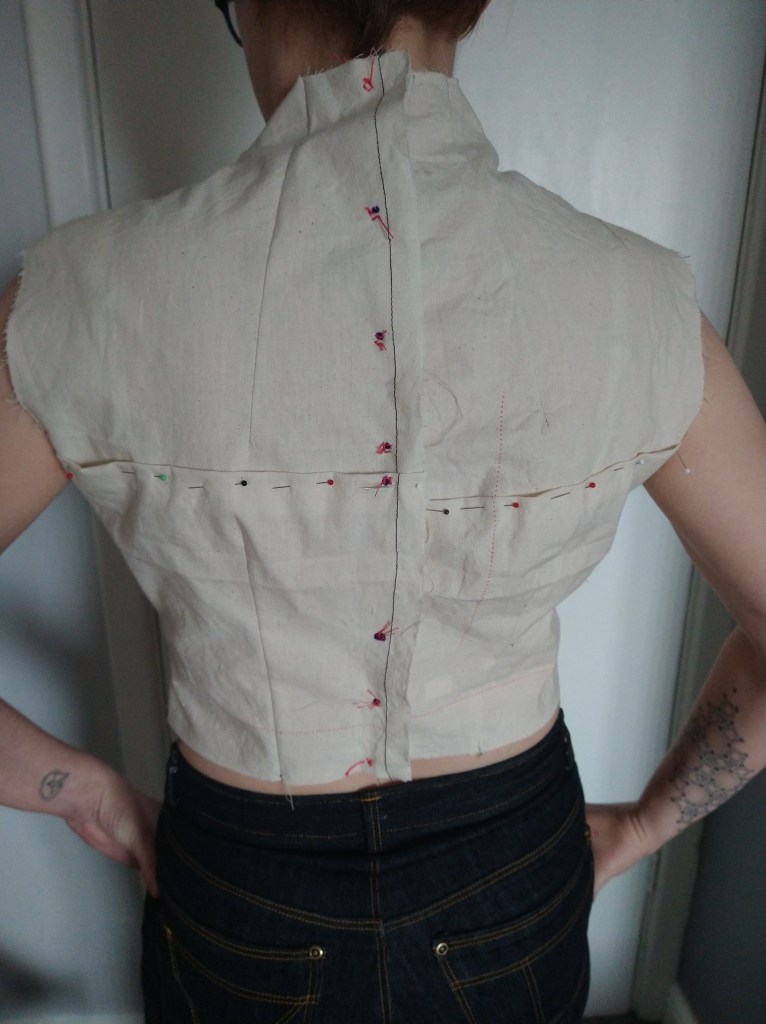
I re-lengthened the darts, adjusted the shoulders correctly so I wasn’t going to be strangled by the dress and cracked on. At this point I was relatively happy with the fit, despite Matt (my groom) pointing out that my boobs looked incredibly pointy. I will not begrudgingly admit he was right, but as I didn’t know how to fix it yet. I decided to sulk about this and pretend it was how it was meant to look. I also added the sleeves at this point for a bit of proof of concept. This was also the last step in the process he was allowed to see, I felt fairly safe up until this point as he is likely to forget what the dress looked like in concept as he can’t visualise things that well from description.

Putting the sleeves in was also a really helpful practice for me to work with chiffon and get used to the instructions. I have worked a fair amount with tricky fabrics but for my wedding dress I figured it couldn’t be bad to add in some extra practise.

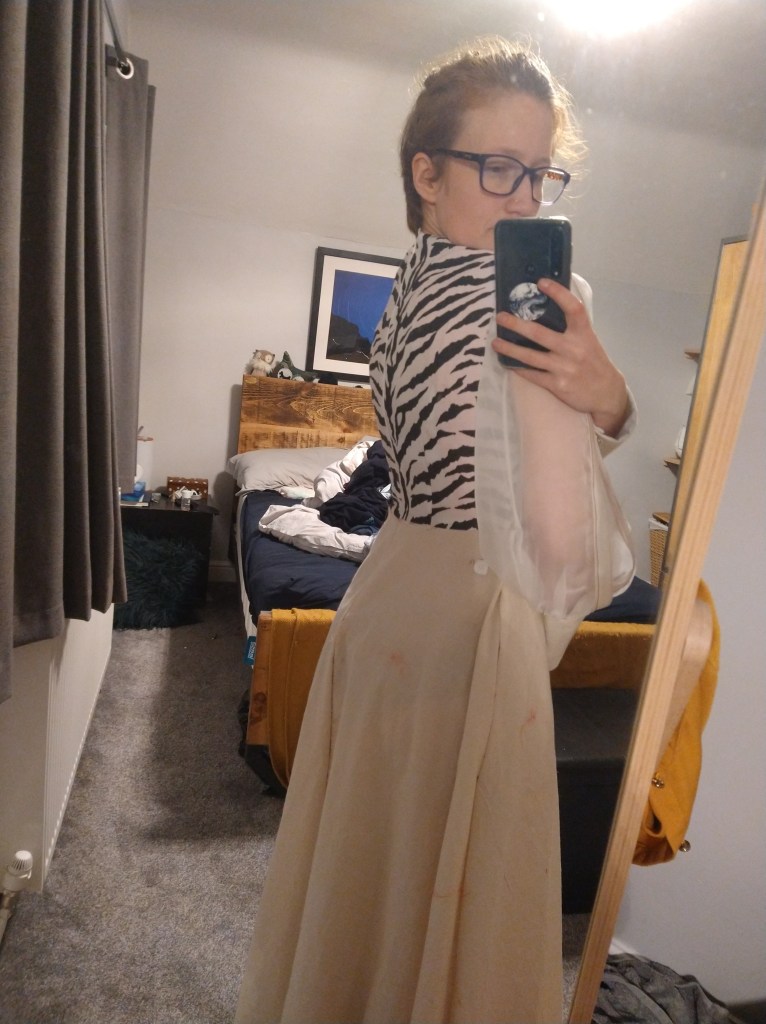
I then added the skirt to allow me to identify what the weight of the skirt was going to do to pull the bodice down and allow it to drop, this may also pull a lot of the wrinkles of the bodice out. Plus, I wanted to see if the pockets included in the pattern were spacious enough. They most definitely were! Also, these cuffs. I LOVE these cuffs.
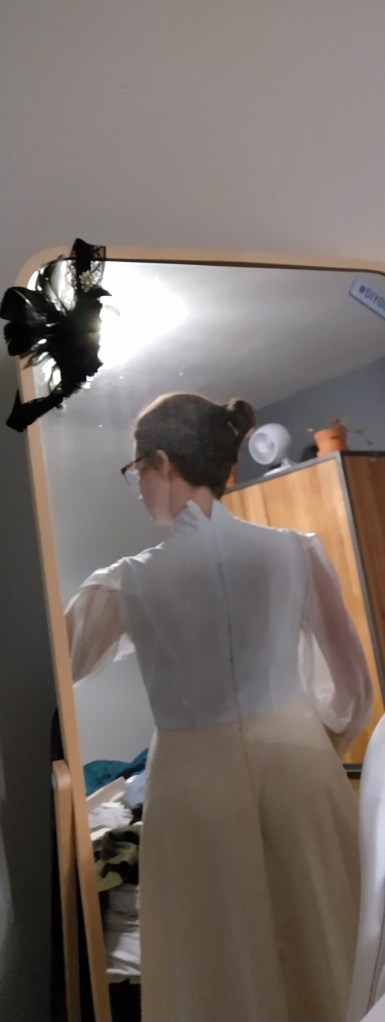
Overall I liked this toile and the fit of it, however it didn’t quite emphasise my waist as much as I would have liked, it felt like there was too much ease in it in general.

Toile 4

  • Size 10 graded to 12 at the waist.
  • 1.5cm narrow shoulder adjustment
  • Same 1.5 inches (sorry imperial and metric use) out of the top of the bodice
  • Now in funky zebra print fabric, plus lining practise
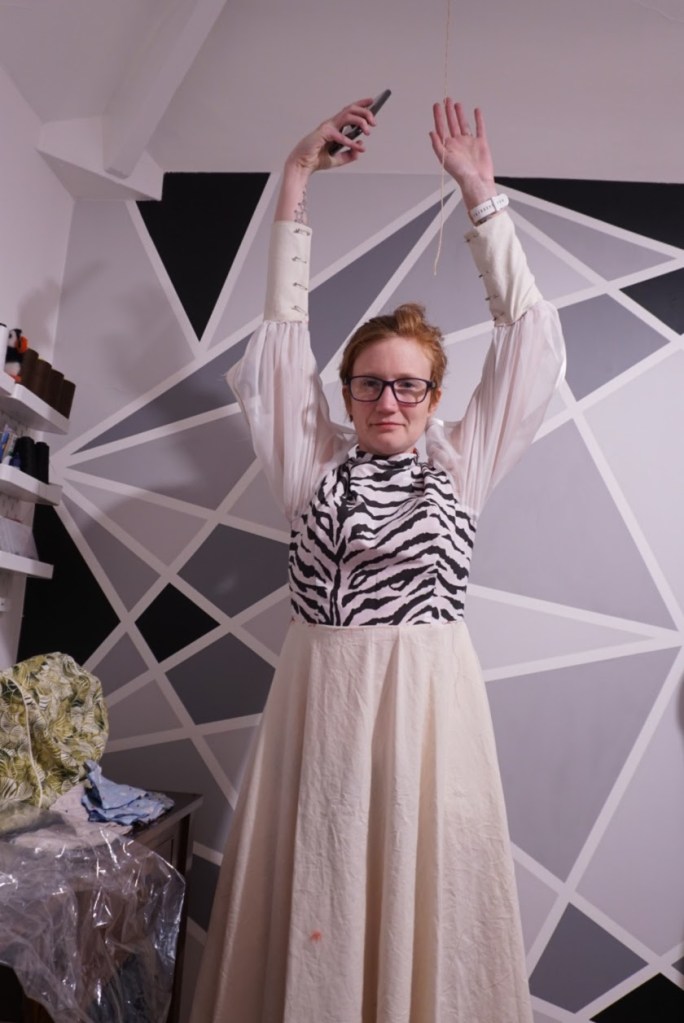
It is incredibly hard to see here (zebra fabric) but there is still quite a lot of excess at the bust. So, I made the same edits as above to the A cup bodice. It may seem like I was being pedantic here but I knew that I could make these tweaks to get the fit as close to ideal as possible.

Toile 5

I don’t have as many pictures of toile 5 as I do of the rest of them. This is the toile that came to the Elisalex bodice course with me. I’m incredibly glad that I took it as the final pieces of the fitting puzzle were unlocked.

  • A square shoulder adjustment of ½ inch (¼ inch on the front and back pattern piece)
  • Release each dart by ¼ inch to free the apex aka. Resolving the pointy boob problem from toile 3.

Toile 6

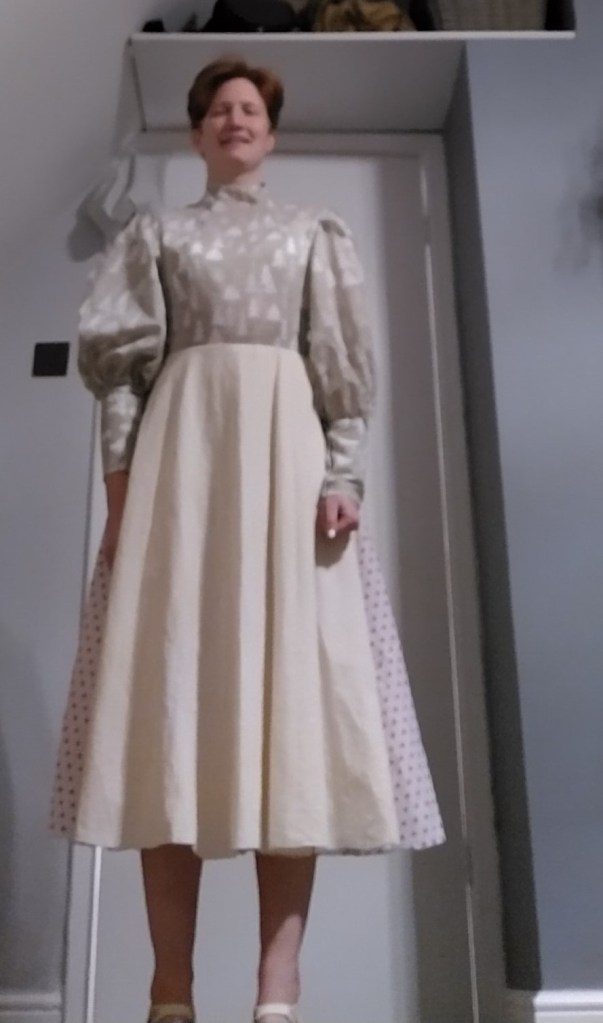
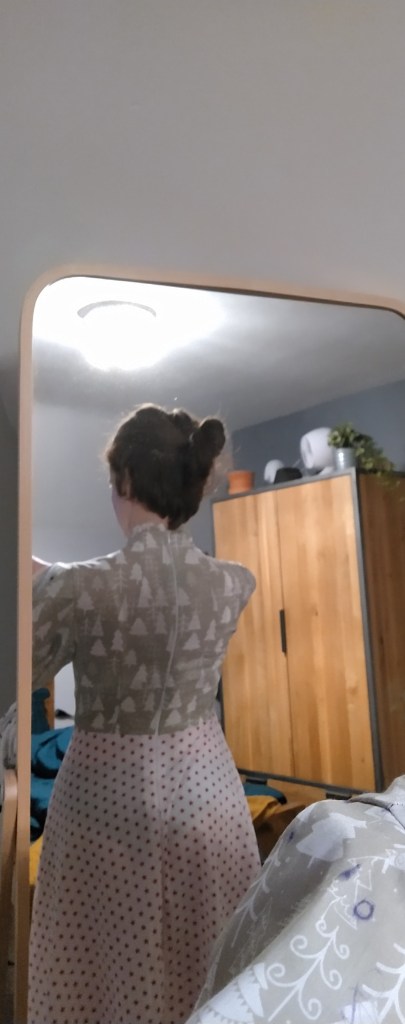
The final toile, the toile to end all toiles. (Please, I love this dress but I am nearly at the fudge it, this will do stage). I cut the skirt properly in a 12, (previously I was just bodging the 14 in), the sleeves in a standard poplin in a 10 (see previous bodging in) and then made the final toile. I also tried it on with my wedding bra to check that the fit worked well with it (I’ve been doing this since toile 4). At this point I made the petticoat to check the skirt poofed out correctly and allowed me to make the final length adjustments (with my wedding shoes shoes on)

This blog has turned into a bit of a mammoth one. So I’m going to start the next one for construction. I hope you have enjoyed reading about the process, seeing my ever changing messy bedroom, accidental black pants under toiles and bizarelly angled photos.

A quick summary of the changes

  • Size 10 at the top, A cup, graded to 12 at the waist
  • 1.5 inches taken out between neck and boobs and armhole redrawn
  • 5/8 inch narrow shoulder adjustment
  • 1/2 inch square shoulder adjustment
  • 1/4 inch dart release to de-point my apex.

I really loved making this pattern, the tweaks I made have definitely made it work and I know that I can make it again in different fabrics. Next up, construction!
DIY Wedding Dress – Patterns, Design Choices and Fabrics

There was a reason that I was hunting for a haribo ring in a box, which was hidden in our boiler cupboard on Friday 29th May 2020. That reason was I had ‘mentioned marriage 3 f****** times before 10 o’clock in the morning and the ring had been hidden for two months so I should really start looking’. The mentions were because I’d found a dress pattern that I thought was perfect for my wedding dress.

Pattern Selection & Design Decisions

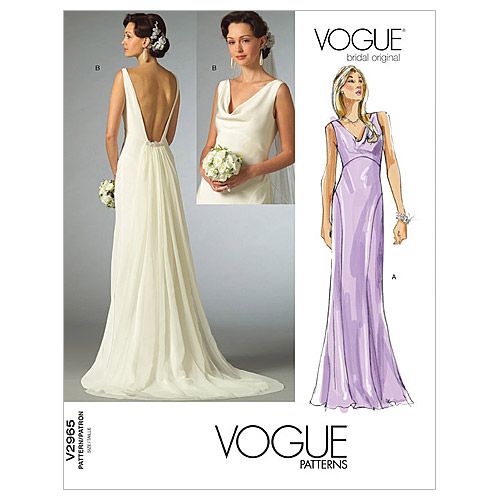
The pattern in question was the Vogue Misses 2965, It has a gorgeous low back, is cut on the bias and has a cowl neckline. This would have shown off some of my favourite features of myself, my collarbones and my back. However, our choice of venue has a lot of stairs and I am terrified of tripping over hems / myself. Coupled with a planned March wedding in the UK where I may have frozen to death, I decided that however beautiful the dress would be, it wouldn’t look great with goosebumps. In the end we got married in April 2021 and had our reception at a city farm, so these practicalities still held true.

Vogue 2965, the dress pattern which launched a proposal!

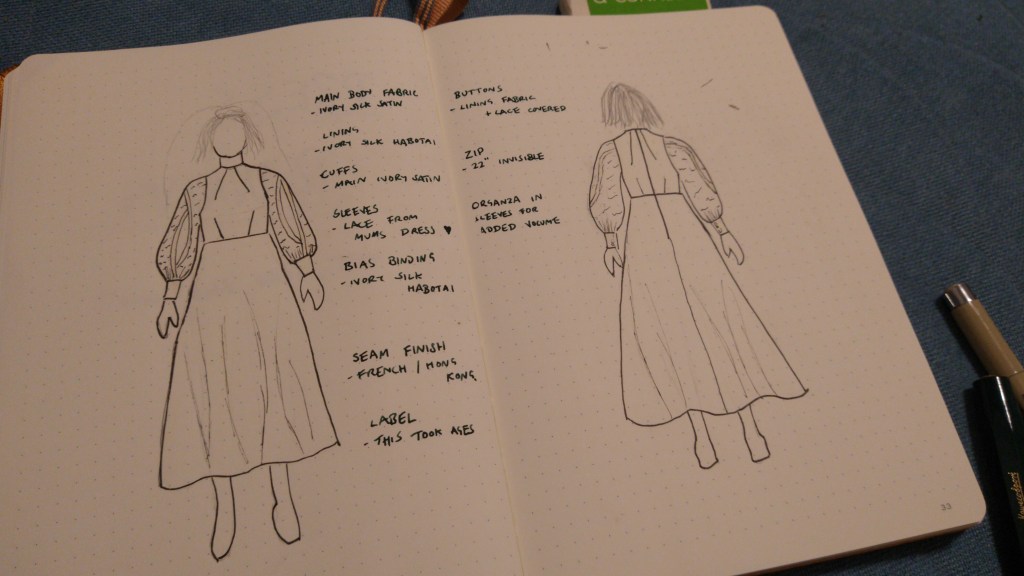
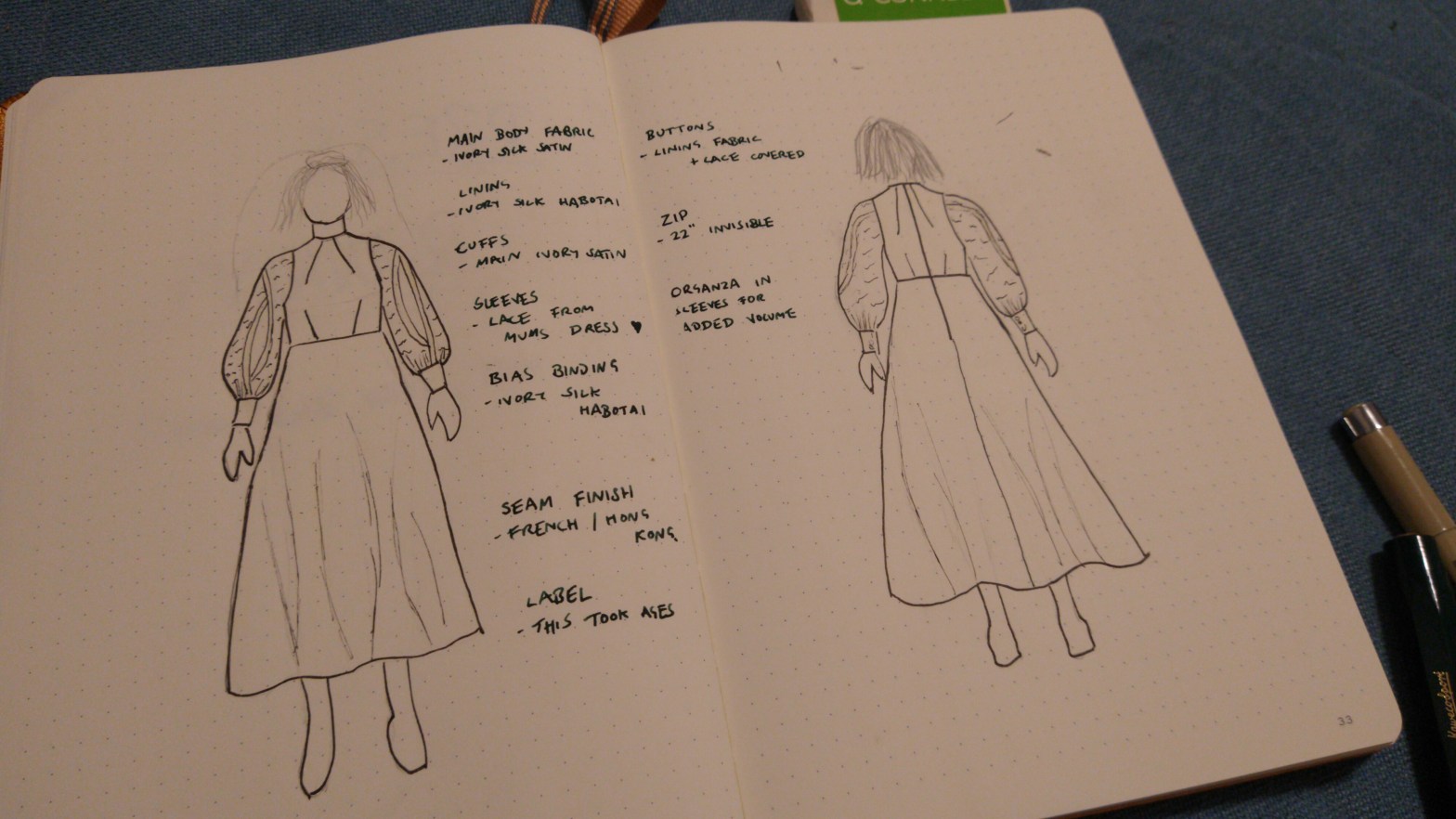
I had a few ideas in mind for my dress. I knew I wanted it to be ivory, silk, cover the tops of my arms and be mid-calf length/ tea length (they’re different!). I extensively searched lots of pattern websites (including the foldline) for inspo. I then made a shortlist, the Vogue 9327 Misses pattern caught my eye, particularly views B&C. I sketched up my ideas (using my mybodymodel) and had a chat with my mum and some of my friends. Most people couldn’t quite see what I was on about. 

Vogue 9327, the pattern which caught my eye!

I really liked view B for the long cuffs and slashed, pouffy sleeves. In my first iterations and sketches I was considering the fabric for these to be lace. My mum had very kindly said I could recycle elements of her dress! After a while I settled on making them in a silk chiffon. 

The initial design, which changed a bit, but not hugely during toileing

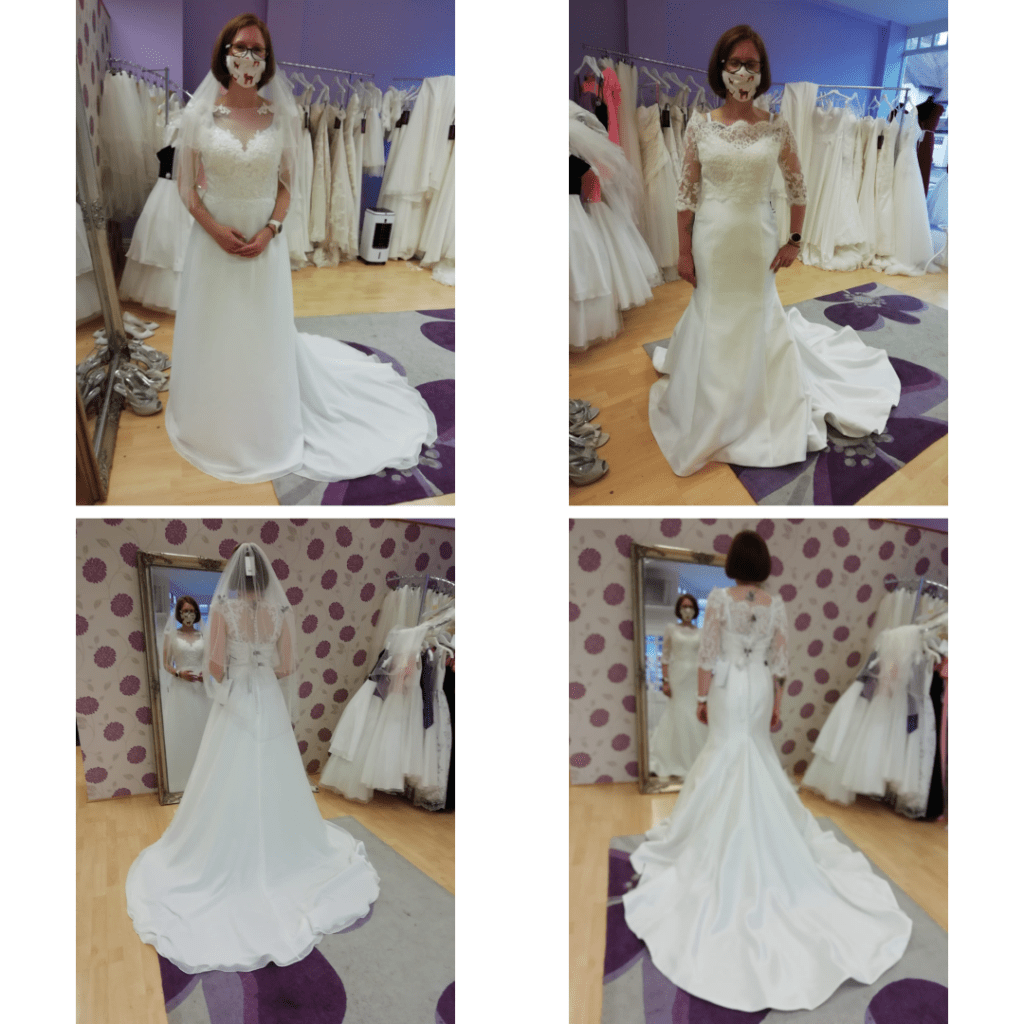
Even though I was making my own dress I didn’t want to miss out on the rite of passage that was going dress shopping. Me and my mothership went off to a boutique to try on some dresses, there weren’t many which were calf/ tea length and to get a sleeve, most of my options were adding a beautiful lacy bolero over the top.  I even tried a really fitted fish tail dress on, which made my figure look great (but restricted my motion way too much).

Dress Trying on 2020 style!

I went back to the drawing board, bought a few more patterns and then decided to stick with my original vision as I couldn’t get it out of my head. I did however realise that I now really wanted appliques on my dress to elevate it to the next level. I also bought a petticoat pattern (Burda 6739) to give the skirt some support structure.

The two patterns I bought as other design options. One is a vintage reproduction

Fabric

About 3 hours (3 weeks) after Matt had proposed, I went on the New Craft House website. They do some bridal fabric drops every now and again, there was some ivory silk habotai of which 3 metres went straight into my basket. This was originally for the bias cut gown, it ended up as lining for my final dress. I then played the waiting game for other silks to come on to the website. I snapped up half a metre of the bone coloured silk organza when it appeared for the areas which may need some stiffening or extra OOMPH. Then, in one of those ‘risk it for a chocolate biscuit’ moments, I bought 4 metres of an ivory silk dupion. 

I call it risky because I hadn’t touched, seen, heard, smelt OR tasted a single one of these fabrics and was largely relying upon the New Craft House to have used the same definition of ivory throughout their fabric collection. I have at least a weekly debate with Matt about what colour something is so I was absolutely thrilled when the dupion turned up and was an excellent match for the habotai. This especially cheered me up as I’d broken my arm rollerskating 3 days before it arrived.

The chiffon from the sleeves needed a bit more of a search, I knew it was unlikely that the New Craft House would have any ivory silk chiffon coming in in the timescale required (3 months). So I went in search of specialist silk websites. I came across Beckford Silk and ordered a few samples. I wavered between natural white, pale cream and cream, eventually deciding on pale cream and ordered 2 metres. Prior to dress construction I got all of my silks dry-cleaned to avoid shrinkage! If you happen to be in the Bristol area I can recommend Victoria Dry Cleaners for their knowledge and willingness to listen!

I also ordered two styles of cotton appliques from Etsy, I couldn’t decide which I liked more so waited until I could pin to the finished dress to get an idea of which went best with the shape of the dress.

For the petticoat I used some of the habotai for the yoke part and ordered some standard ivory tulle for the structure. I dyed some of the trimmings and lace from Mums dress and used these for the finish of the petticoat hem.

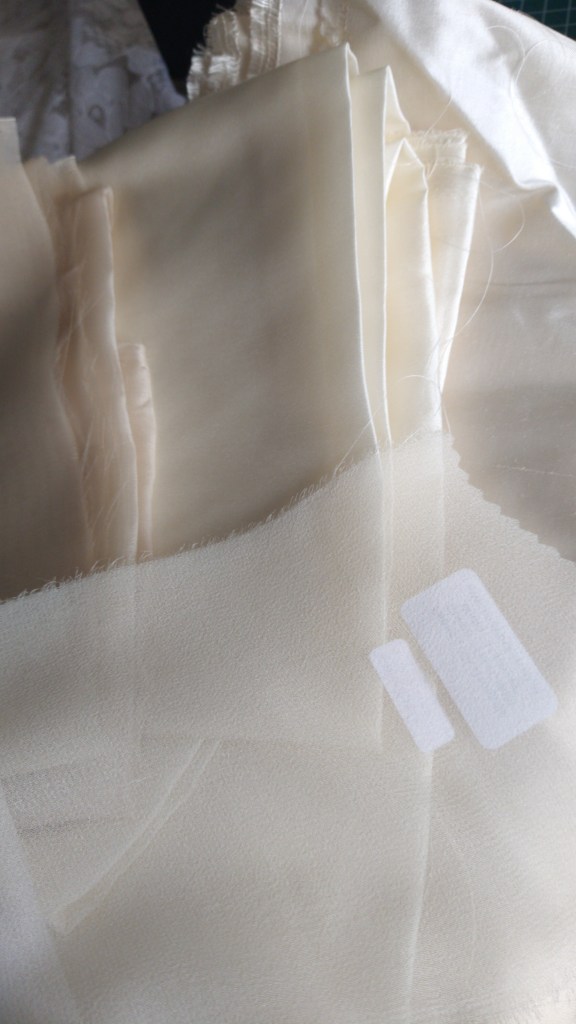
From left to right: Bone organza, ivory habotai, ivory dupion. Bottom, silk chiffon.

If you’re still with me, thank you and congratulations! The next post on the dress is going to be about the fitting process and construction tweaks, the final one will be a lot of picture spam with close up detail shots!

** Disclosure** I have put a lot of links in this blog, I haven’t been asked to include these links or been paid/given anything in return for linking them here. I just want to give the best information possible about my process

A Tale of Two Tyynis

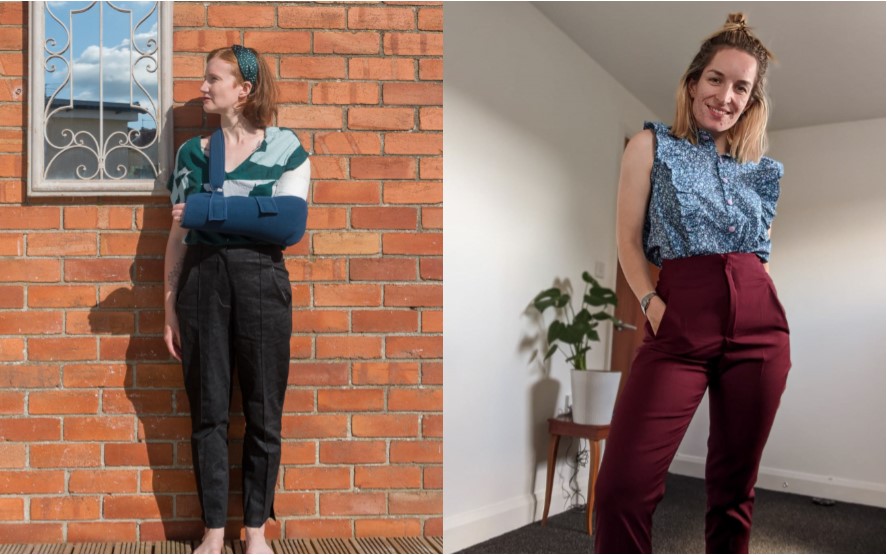
Between myself and Kat of Measure Twice Kat Once we’ve been on quite a trouser spree recently. Kat is starting her graduate job and I’m enjoying finding my sense of style so we decided to make some trousers together!

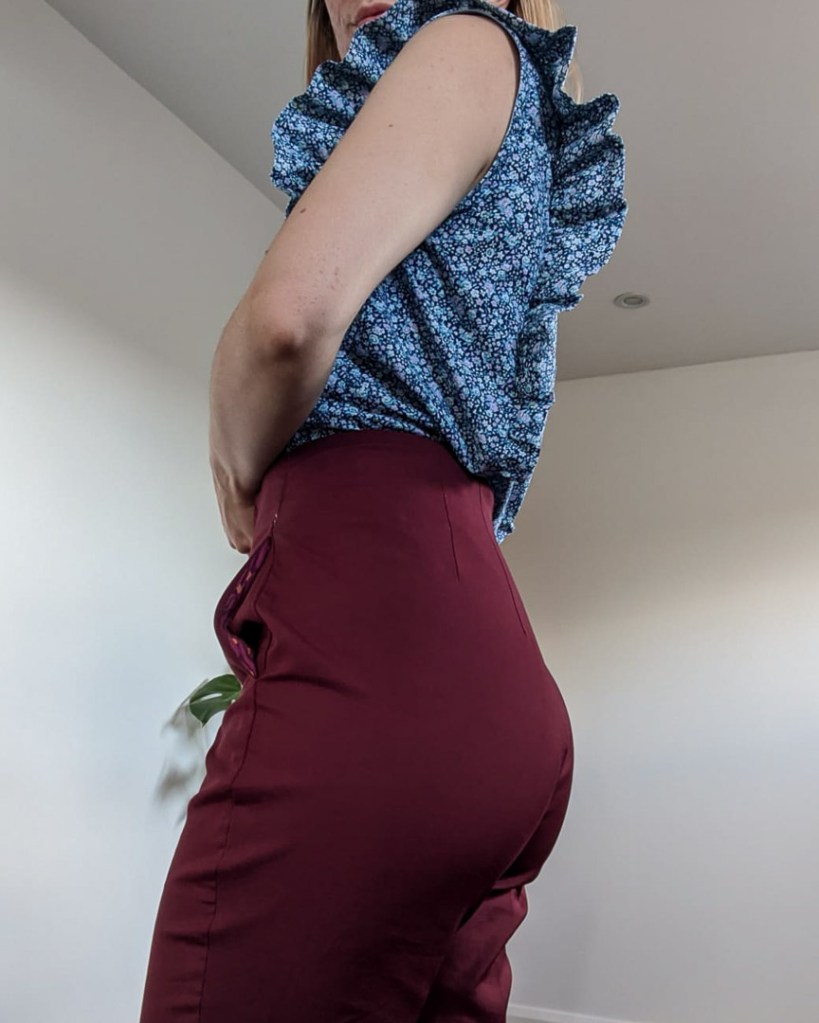
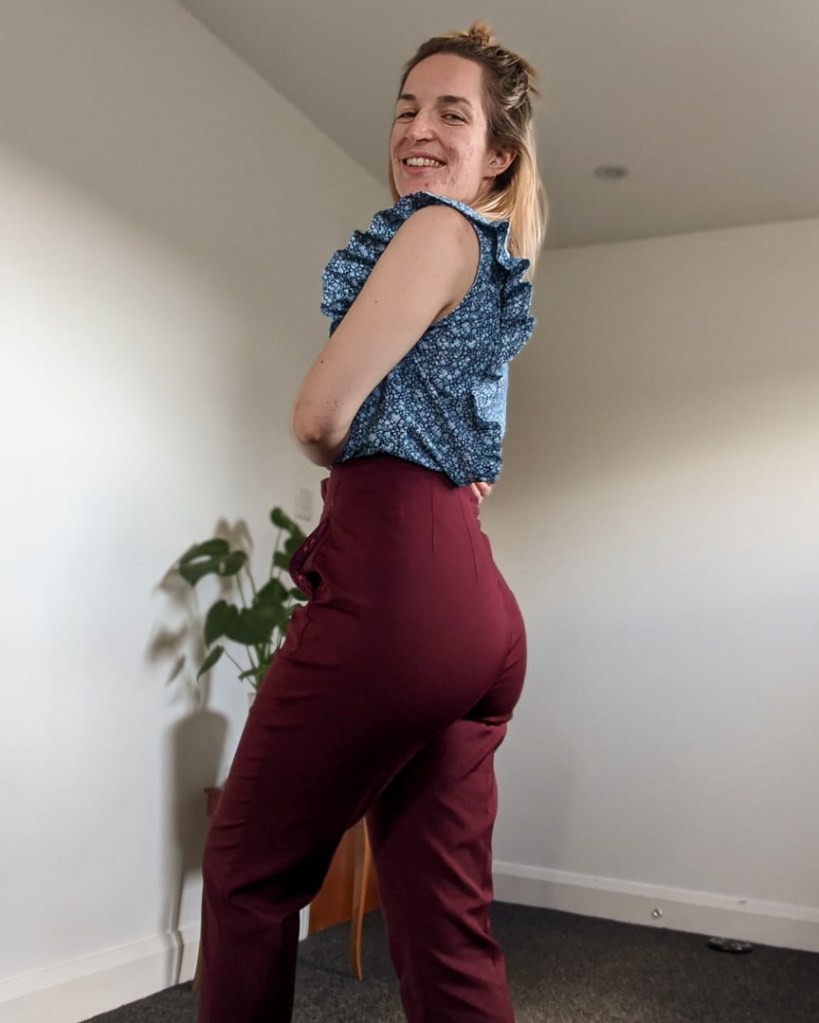
Vicky: Kat suggested the Tyyni trousers from Named Clothing. What drew us to the pattern was the shaping waist darts, the pockets and the nice detail of the side vents. This made them a little different to what else we’d seen out there. They also seemed fairly ideal for our pear-portions (puns make me happy).

Kat: To me, the Tyyni trousers seemed like a very classic work trouser, and so I had hoped to make a pair which fitted both my hips and waist – something which I have had difficulty finding in the past.

Size Selection/ Alteration

Vicky: My measurements are currently B32.4” W28” H39” which put me in the UK size 10. I tend to pick off finished measurements rather than size charts in general. I didn’t make any adjustments because there wasn’t any info available on the rise, where I usually make my trouser adjustments. The pattern does have handy marks about where the hip and knee are too.

Kat: My measurements are B33”, W25”, H37”. My hip measurement was closer to a 10 and waist closer to a 6, but after speaking to Sharlene (she made a gorgeous jacquard pair and matching blazer – my semi-inspiration) decided to  cut a UK 6 due to the slight stretch of the material. I took 2 inches off the length as the pattern is drafted for someone who is 5’6”.

Vicky: Both of us were, to a large extent treating this as a wearable toile knowing that these would fit us way better than ready to wear but would still require some edits. Plus, we also needed to learn some construction techniques!

Fabric Selection

Vicky: This is always one of my favourite parts. The pattern calls for a stretch woven with 5-10% stretch. This was a totally new field for me but I knew Sarah at Likesewamazing had some gorgeous paisley designed deadstock in. I was inspired for these trousers after a chat with Stacie (Notions of a Dressmaker) who’d made the SOI Ultimate Trousers. Pockets wise I used some Grey Bamboo Tencel Twill I had leftover from previous projects because it is dreamily soft.

Kat: I struggled to find a nice stretch woven for ages, but when I was buying shirt material for some shirts I spotted this Burgundy stretch cotton suiting fabric from Croftmill, which was quite a steal at £6 a metre, so figured it would do for a wearable toile. I had some Burgandy Rayon leftover from my Sudley so used that for the pockets, which maybe clashes a bit but hopefully won’t be seen!

Construction

We constructed the lions share of these on a zoom call together. We used a regular stitch i.e. not zig zag or stretch for the seams and a sharp needle. We were a little unclear on if this was correct but it seems to have worked.

Vicky: I was slightly behind on construction compared to Kat as she’d already cut hers out. I added the pintucks as I enjoyed the overall aesthetic. I had to unpick the ones on the back as I’d used the wrong notch at the top but fortunately I’d used a longer stitch length!

After Kat had forged ahead and we looked at the instructions we used the method we were already familiar with to insert the inseam pockets. I’m not great at left and right so my fly is actually on backwards, I followed the instructions for inserting the fly mirrored.

Kat: This was my first zip fly as when I’ve previously made trousers I’ve done the button fly, Vicky has a bit more experience from making her Dawns.  I’d tried my trousers on at this point and identified I needed to take in about 4cm at the waist which I did using the back seam, starting from level with the bottom of the darts and grading up.

Vicky: We both found the fly insertion instructions to be tricky. I would recommend reading instructions for another pair with a fly too to really help understand the method. Once the fly had been inserted I tried mine on. The fit in the waist is great but in the hips they’re too large, I think I’ll size down to an 8 in the hips if I make them again.

Kat: Attaching the waistband was a challenge, I definitely had to put these in the naughty corner at least once. I was so confused by the instructions and my zip not being neatly sewn didn’t help. After cutting off the section it says to remove for the one side and about 4cm off the waistband as this was the amount removed from the back seam, I just couldn’t get the waistband to fit on. I ended up sewing on an extra section so it would work. This is possibly because my zip wasn’t sewn close enough, but to be honest I was very confused and frustrated at this point.

Vicky: having been slightly behind Kat I knew that this insertion was going to be a challenge. I sat down and had a cuppa first. My advice for construction is:

  1. For the fly overlap, baste this prior to attempting waistband construction
  2. Remember you are sewing the short sides of the waistband to the fly first.
  3. Don’t cut any of the seam allowance before you’re 99% certain the waistband is on correctly.

Kat: The final few steps were comparatively easy and I enjoyed the construction of the vents at the bottom.

Vicky: My final tip for the fly is chalk on where you’re going to topstitch or you could end up incredibly wonky!

Verdict

This is definitely an intermediate sew and these are more challenging than the Chandlers or the Pietras. If you can find a sew along definitely do use one, but during Kat’s waistband meltdown she couldn’t find one.

Vicky: My fit requires a few more tweaks. I need to do a crotch to waist analysis and probably take them in to the 8 at the hips. These trousers are destined for my sister to see if they fit her. It’s not a priority but I would like to make another pair.

Kat: I actually really like the fit and style of these, but my zip was a massive fail. I am tempted to try again so it is a neater finish as think these could be great for the office. Hopefully no one will be staring at my crotch too much! My pockets stick out a bit, which may be due to not following instructions, or just down to my hip to waist ratio! Overall, a really nice pair of trousers which I’d like to attempt again and hopefully do a bit better!

Likes

  • The different style compared to what else is available
  • The pattern markings showing the knees and hips
  • Leg Vents!
  • Pockets

Could be better

  • Complicated to follow instructions
  • Lack of information on the rise