DIY Wedding Suit – Patterns, Toiles and Fabrics

Matt (my Husband) already had a suit. So I knew that I could try to make one with very little pressure on myself if it all went horribly wrong. Even my lovely sewing friends thought I was a little bit mad. I thought I was a little bit mad. Without further ado: the suit making process.

Resources and research

When deciding to make a suit I did a lot of research into techniques, processes and materials. Brittani of Untitled Thoughts had recently made a suit jacket for her groom and so I read all of the blog posts available (Part 1 here). The amazing resource that got us both through our suit making journey is the book: Tailoring: The Classic Guide to Sewing the Perfect Jacket.  I found it to be an invaluable resource on ‘how to’ and rather helpfully ‘why to’. 

One of the many things you read about when making a suit, coat or similar is that you need to use a clapper to get crispness in your seams. I bought mine from Maven Patterns but there are several available. I also used a tailors ham and sausage to get the pressing right alongside a pressing cloth. I had cleaned my iron using the hemline cleaner, I would not recommend this. There are now deposits built up in the non steam holes in my iron. One of the best tips I can give for suit making is to really, really, really spend time getting the pressing right whilst you make the suit. Following making the suit also consider taking it to a Dry Cleaners for a professional pressing too.

There is even more hand-sewing in the suit than the dress. One of the tips for the hand sewing is to use a silk-thread, when completing the hand-sewing it is important to cover the thread with beeswax and to heat it quickly to prevent it from tangling. 

Pattern(s)

One of the key things that Matt wanted in a suit was for the jacket to be lined. He also wanted pockets, two buttons and for it to be single breasted. There are surprisingly few mens suit patterns available for home sewing, Vogue do an excellent line. 


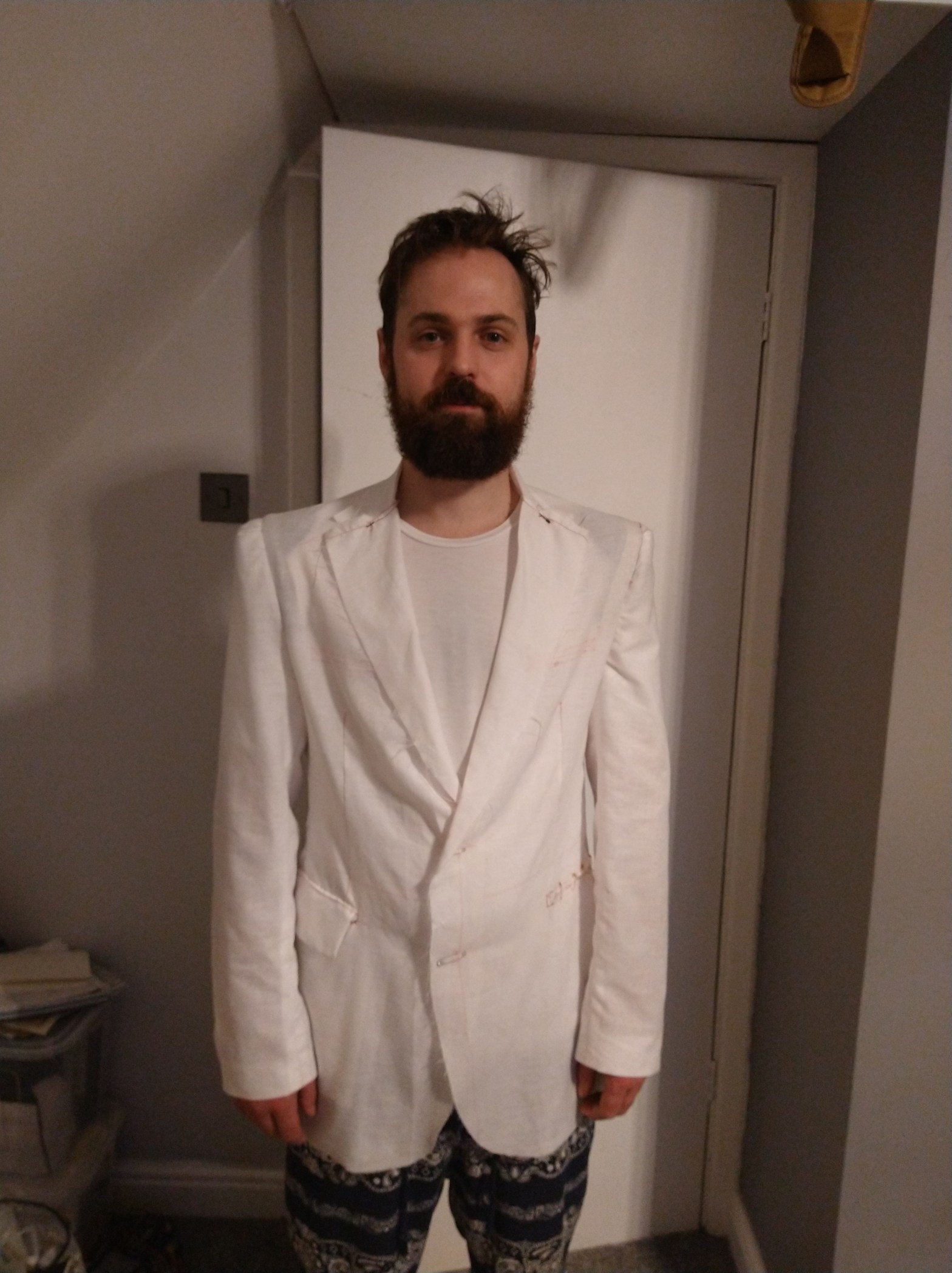
The first pattern that we bought was Vogue 8988, I should definitely have paid more attention when getting Matt to buy it. It didn’t have a lining so I would have had to draft one myself. Nevertheless we cracked on. A note to Vogue, the stripy fabric used for the single breasted sample is not helpful to people looking to make the garment to review style lines.

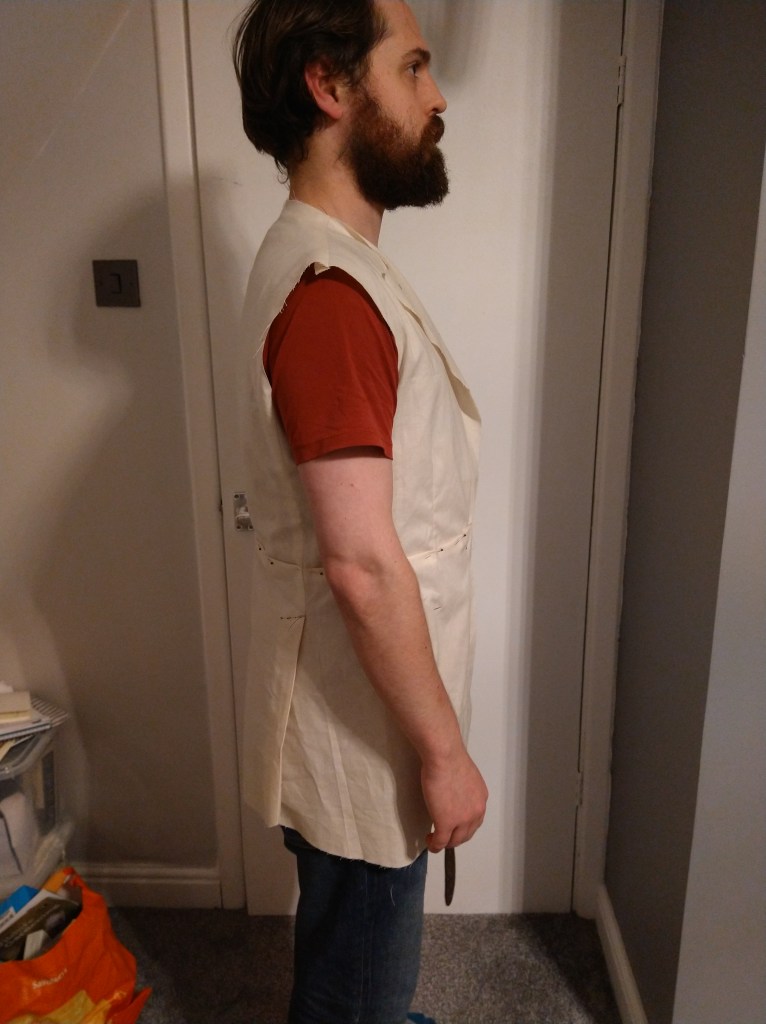
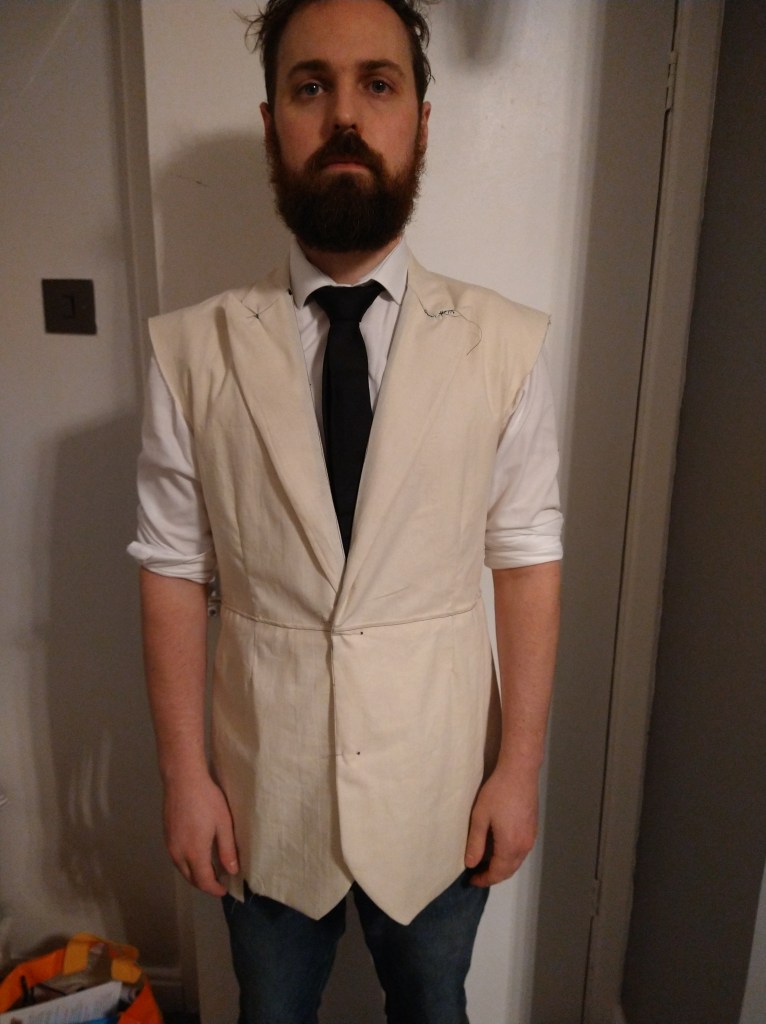
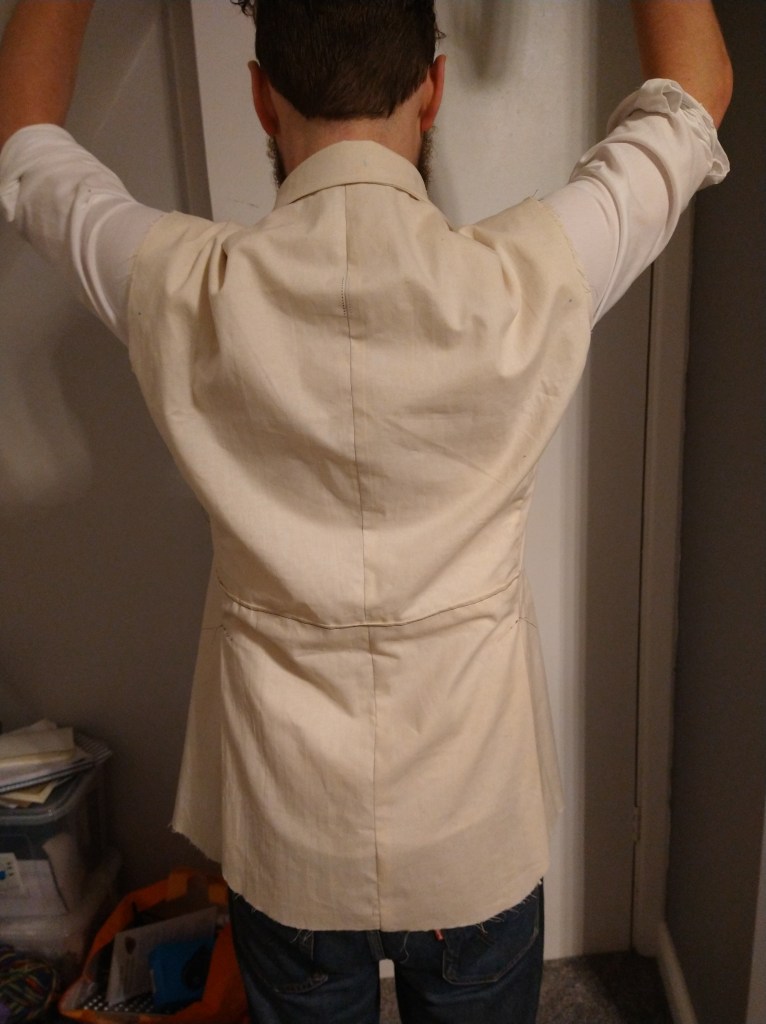
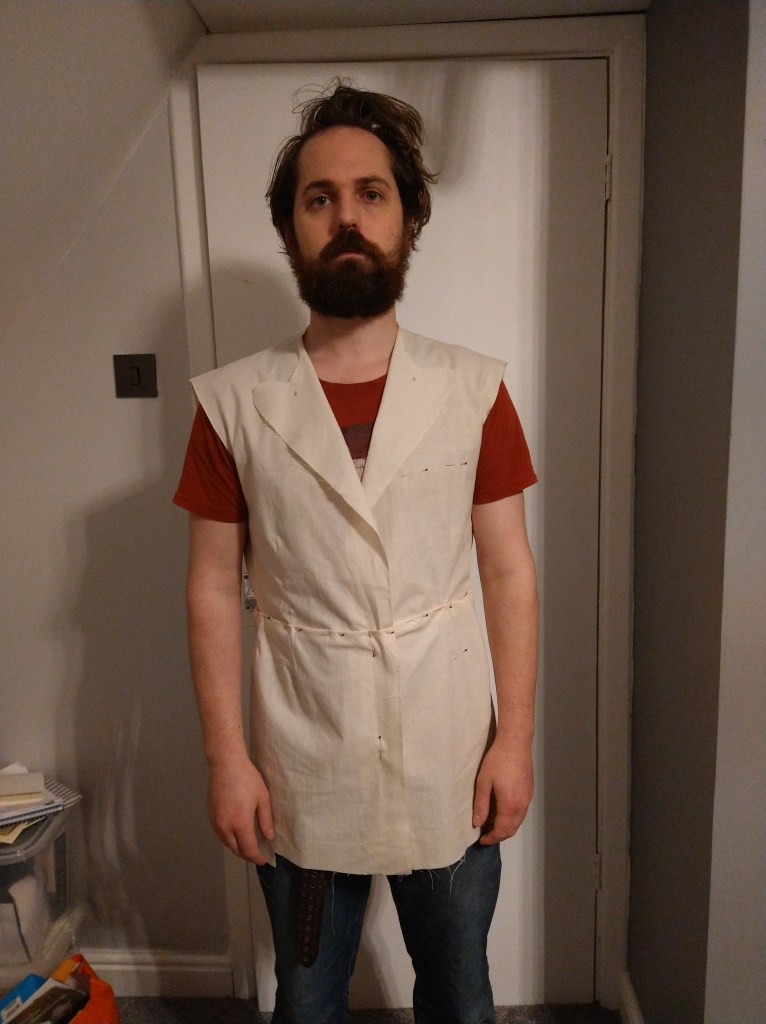
I made a toile of the jacket first, it was a fairly straightforward sew, I didn’t french the suggested seam as it was a toile. If I were making it properly, without lining, I would 100% have done this. I took 2” out of the length above the waist and would have also taken some of the ease out of the back and done a narrow shoulder adjustment. However, shortly after this jacket was put on pause for one with a full lining.
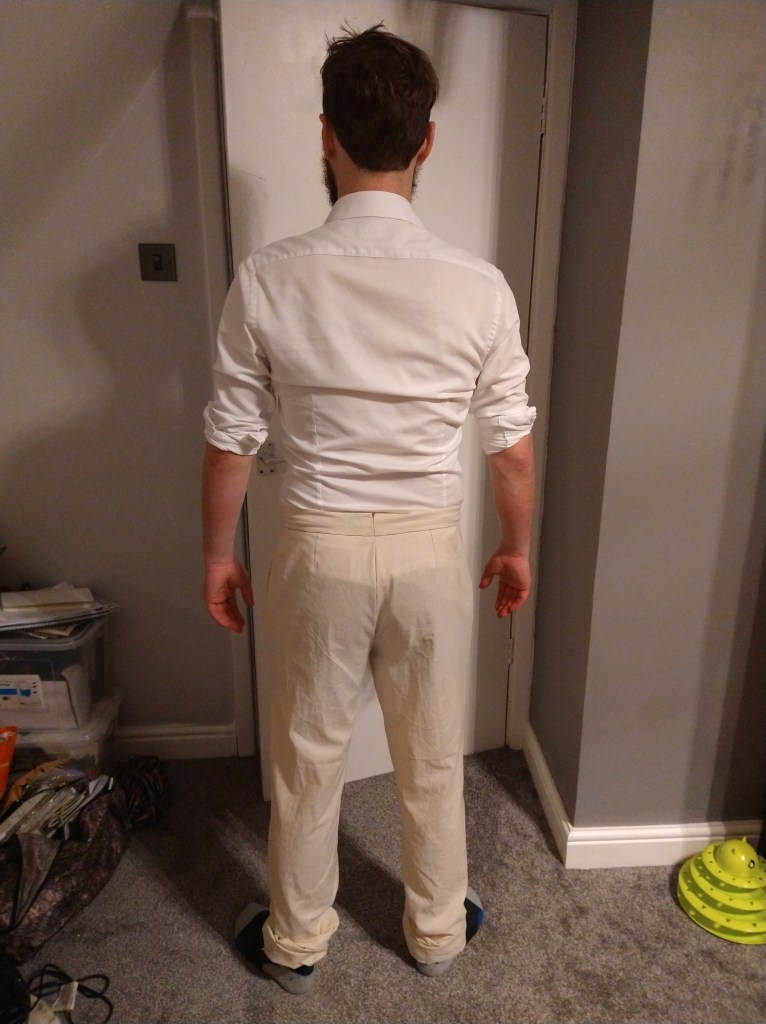
Whilst waiting for the second jacket pattern to arrive I made the trousers. These fit surprisingly well out of the envelope in size 38. The biggest issue was the need to remove 7” (17.5cm) from the length. I found the construction fairly straightforward on the toile. The waistband would prove to be trickier in the actual construction.

Pattern Number 2 – A Jacket with Lining!
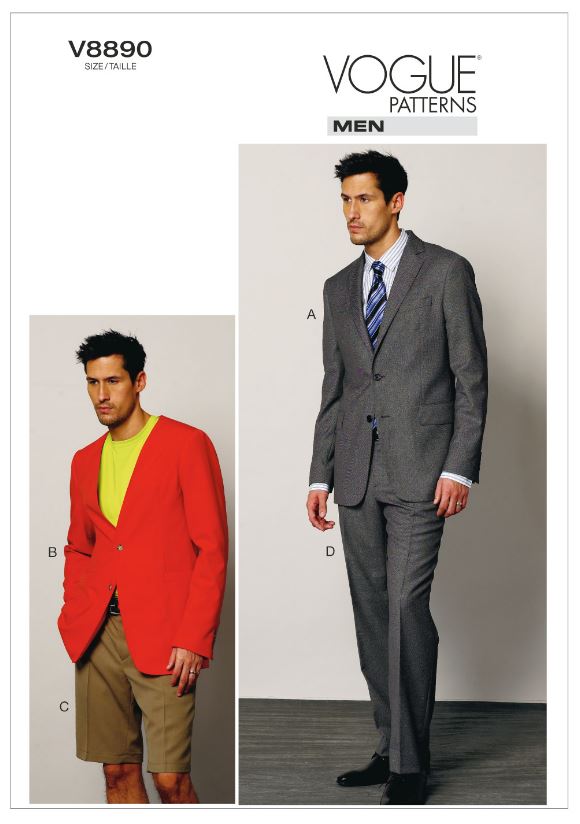
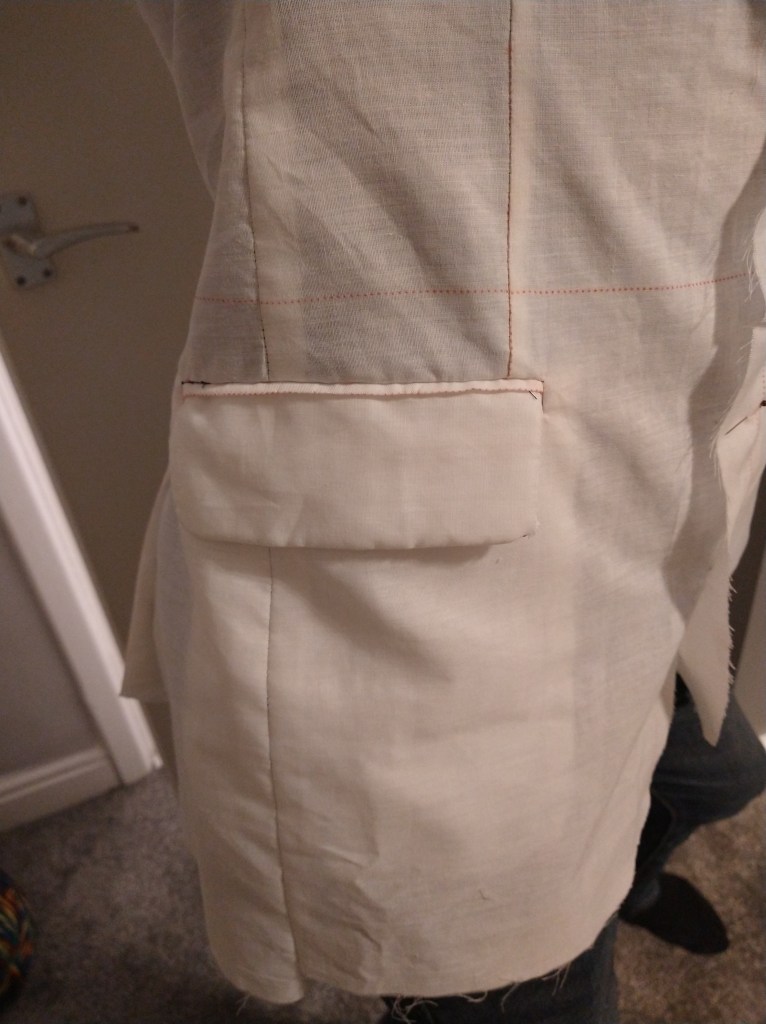
This time we selected a pattern with lining! We’d originally discounted V8890 due to the weird view B with no collar (I’m not a style trailblazer). The style lines are fairly similar to the V8898 with the exception that this also has a side panel where the 8998 did not. Now keen to get on with making the suit, I started the toile. I started at the size 40 and made adjustments from there. Due to the construction method of the jacket I also practised a welt pocket!

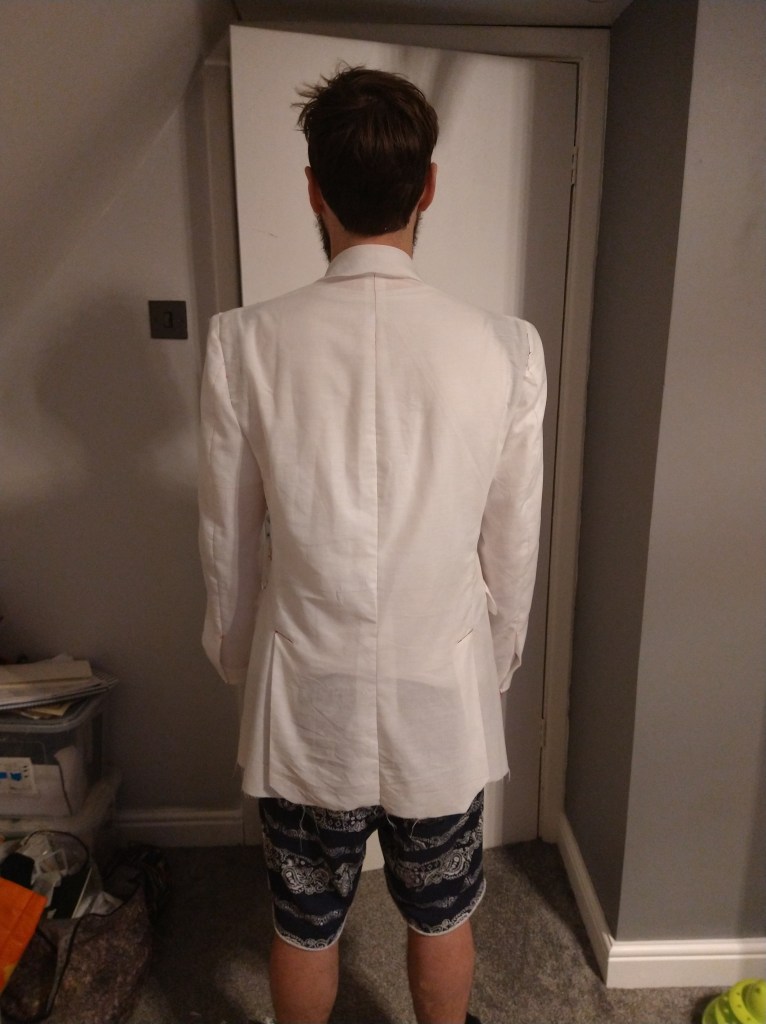
I did a ⅝” narrow shoulder adjustment, ½” reduction at the side seams and ¾” for the back seam. The sleeves were also reduced by 1” but kept fairly long at the preference of Matt. I also put the sleeve head and the shoulder pads in the toile to ensure that they were sitting right. It was time to start the real thing!

Fabrics

Matt had a very definite aesthetic in mind for the suit. It was always going to be a black suit. We ordered quite a few samples from multiple shops and there was some debate over: 

  • Too patterned
  • Too fine
  • Weird texture
  • Wrong black
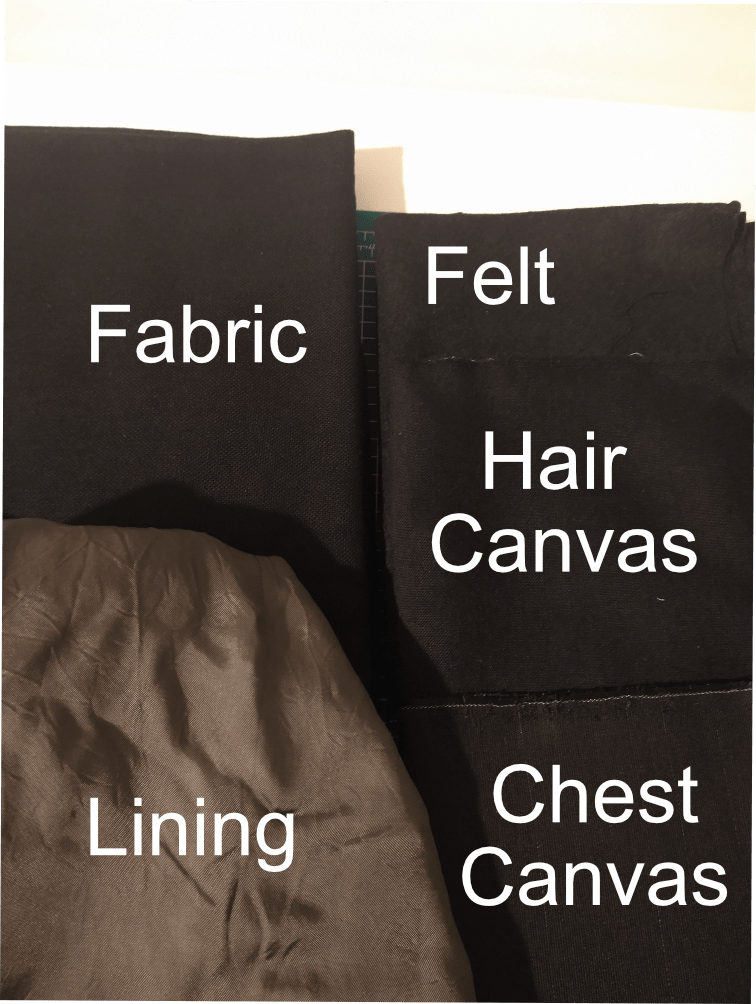
The fabrics purchased to complete the suit

Finally we settled on the McElroy Seattle, a 100% wool Mini Hop-sack Weave Suiting which we bought from Sherwoods Fabrics. Matt liked the texture and slightly more informal look of the fabric. I was a bit nervous to make my first suit in such a loose weave but forewarned is forearmed so off I went!

Having done my research and read the pattern envelope I knew that I was going to have to buy some specialist fabrics. I identified a UK based company (helpfully called the lining company) that sells tailoring supplies and purchased:

  • Chest Canvas –  a special canvas to bolster and stiffen the structure around the chest
  • Hair Canvas – specially used for interfacing,stiffening the front (and back) of the jacket, also giving the lapels, collars and cuffs structure.
  • Collar Felt – specifically for the undercollar to assist with shaping.

The lining fabric was purchased from Like Sew Amazing, a gunmetal (we went rogue on the colourscheme) ex-designer viscose. It was beautifully soft and really helped to elevate the look and feel of the suit.

Up Next

Up next will be the suit construction and nitty gritty! Plus some pictures of the suit and the wedding. This was even more challenging than making the dress for me and was a lot out of my comfort zone. It was, however, really fun and I will be planning to make myself a blazer in the near future, once I’ve got through all the sewing I neglected whilst completing the wedding makes.

DIY Wedding Dress – The Big Reveal!

There isn’t an awful lot to say that hasn’t been said about the dress now. Post 1 was concept, Post 2 was fit, Post 3 was construction. I did promise two things, reflections on what I wish I’d known and the overall success.

What I Wish I’d Known

How emotional I’d get when I started being able to try the dress on. This surprised me it was the emotions of all of the love put into the dress and the knowledge that this was a creation I was going to start a new chapter of my life in. I also said to several of my friends that the sewing on of the appliques felt like each stitch was putting a little bit of love and hope into our marriage.

I also wish I’d known other bits of fit information prior to starting the dress, but that was OK. I knew fitting was a process that takes patience and surprisingly for me, I had the patience to do the dress justice.

Overall Success

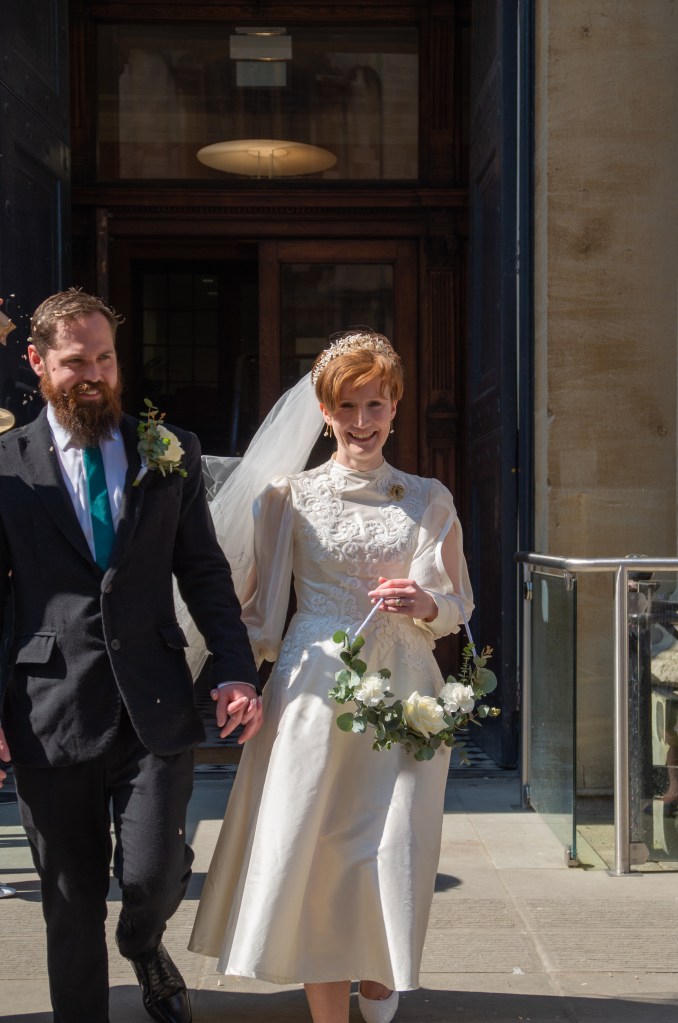
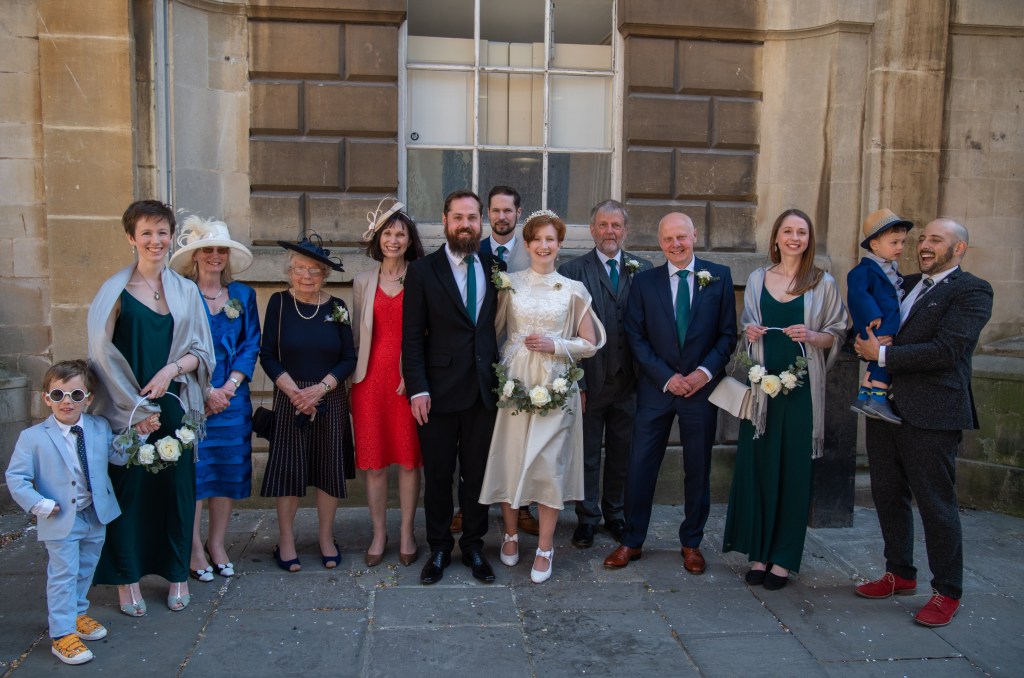
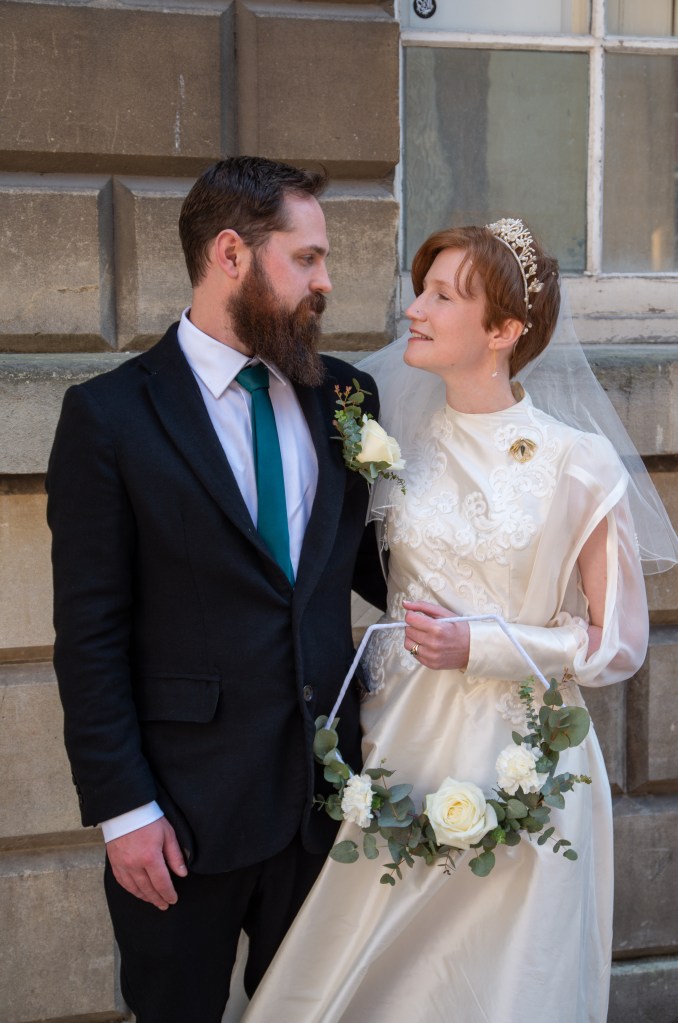
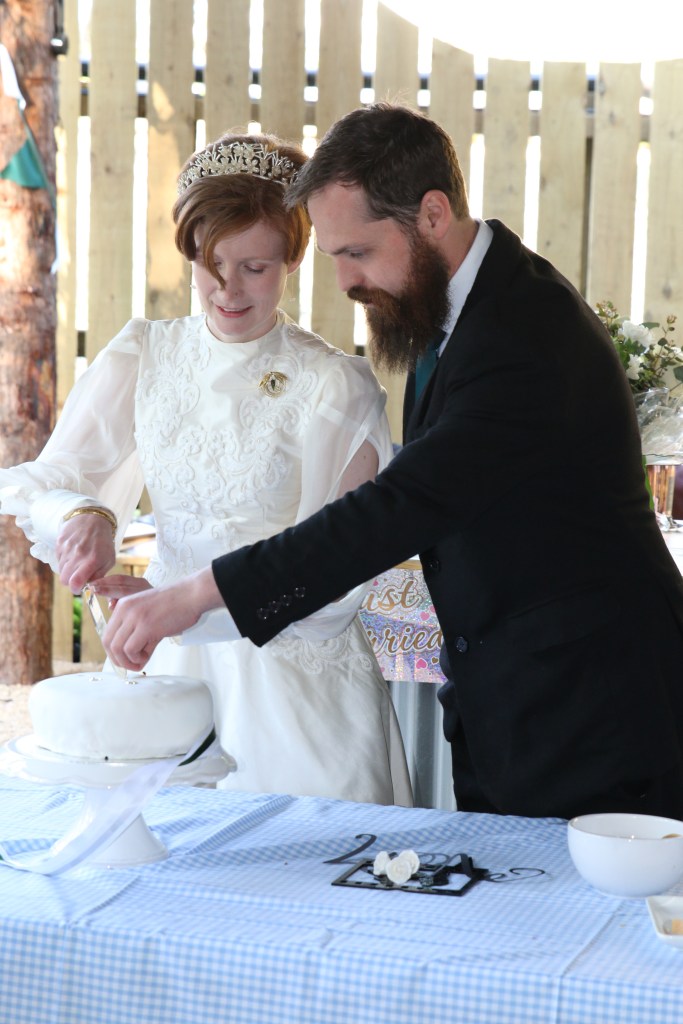
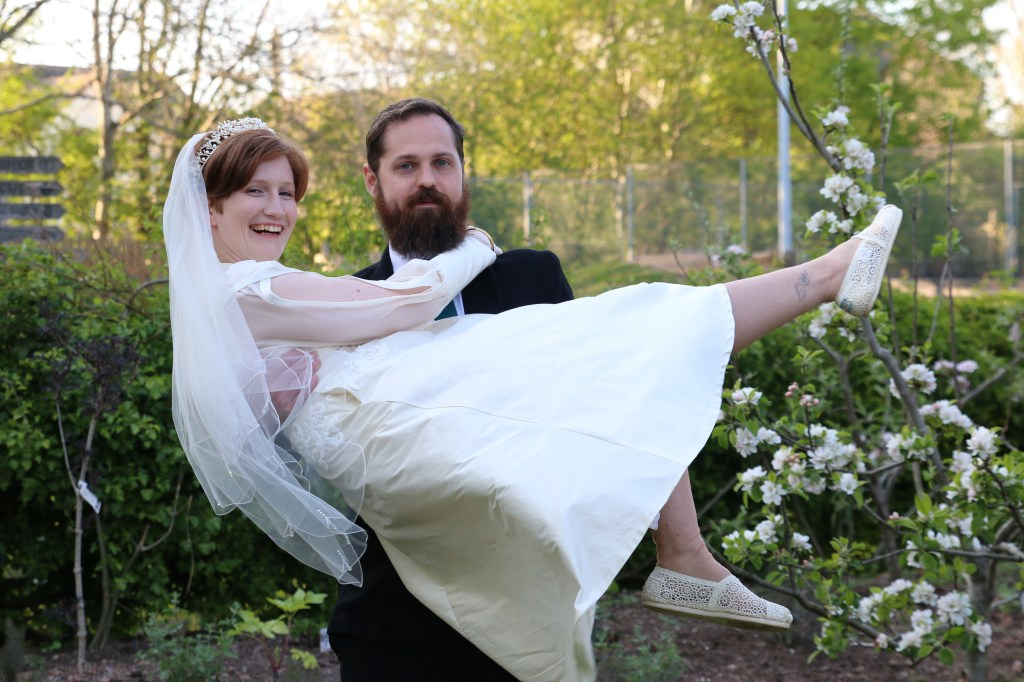
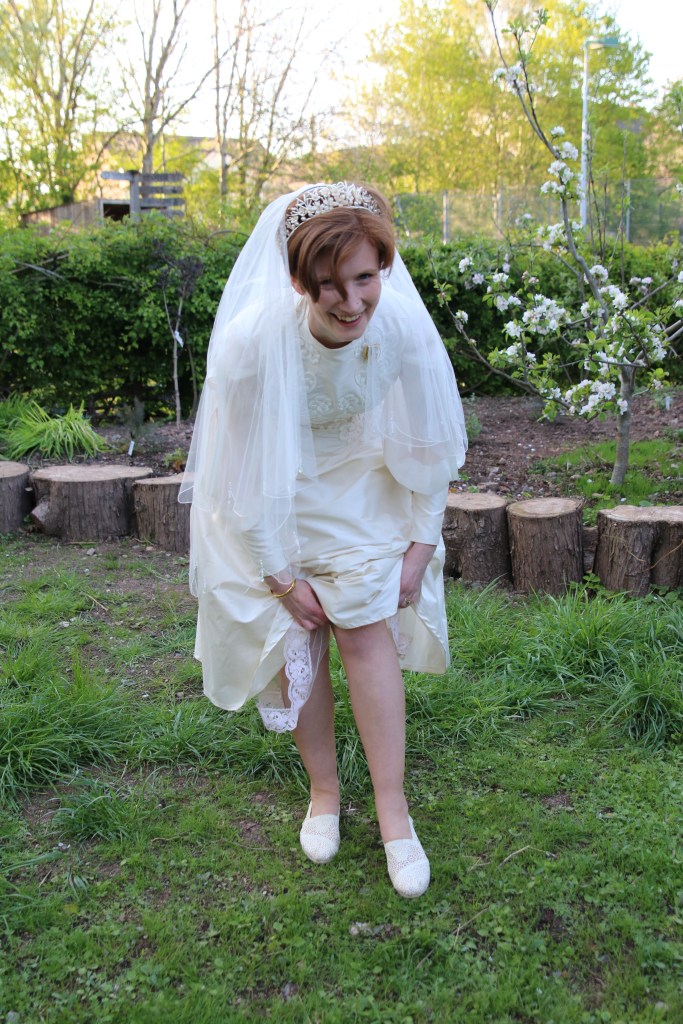
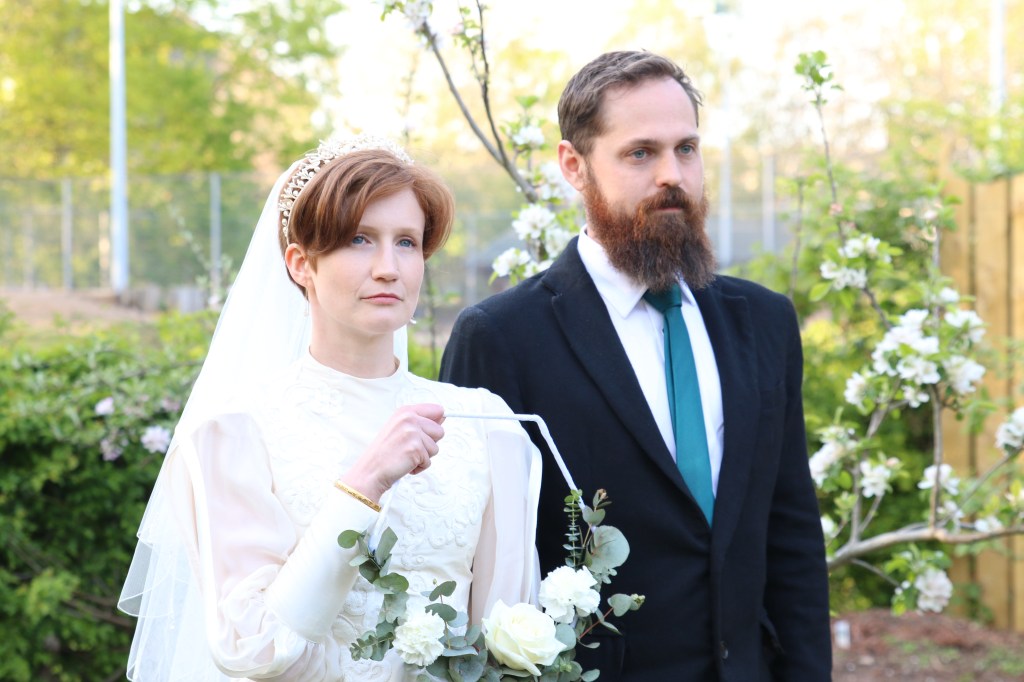
Did I have a dress to get married in? Yes. Did it fit? Yes. Did I trip over it? No! (success achieved). I could nitpick and I could say what I would do next time (some musings in the previous posts re: hand hemming). However, I am thrilled with it. I have married the man I love wearing a dress I made (and he wore a suit I made for him). Please enjoy looking at these photos which show how happy I am to be with the ones I love and enjoy looking at the details of the dress. Photos were either taken by Nickie of Brown Eyed Photos or My Father in Law Trev.

Other Details

Old – My headdress which belongs to my Gran, my brooch which belonged to my other Gran.

New – My veil, dress and undergarments!

Borrowed – My headdress and my garter

Blue – My garter (not pictured)

The next installment of the DIY Wedding will be two posts on the suit. Until then, enjoy a prosecco, tea or coffee for me!

DIY Wedding Dress – Construction

In Part 1 I explained my style choices & Fabrics, Part 2 showed my fitting journey. You’ve made it to Part 3, putting the first two blogs together! I started cutting and putting the dress together over the period following New Year 2021. With the UK going into lockdown I didn’t really have a huge amount else to do.

My Machine

I am incredibly lucky to be the owner of a Singer 201k, this previously belonged to my (now) husbands Nannie, Cissy Isaacs. My In-laws gave it to me when she passed away and it has truly re-ignited my passion for sewing. I could not think of a more fitting thing to do to involve her in the wedding than sew my dress (and Matts suit) using her machine. My own Gran, Ellen Smith, used to take a keen interest in my sewing when I was at school and I know that both of them would be absolutely rooting for me throughout the process of creating the dress.

Equipment

I am a BIG sewing gadget nerd and am a huge believer in having the right tool for the job. (Caveat: I also enjoy a good bodge when it’s not necessary or important to get it fully right). A few of the tools I found exceptionally useful are listed below (Links are own opinion, nothing was gifted)

  • Speciality silk pins, less chance of snagging on the fabric
  • Sharp scissors
  • A rotary cutter with a sharp blade (helpful to cut out the pieces, also used to grade the french seams down)
  • The straight stitch foot, the quilting foot with adjustable seam allowance, the rolled hem foot and an invisible zip foot.
  • Microtex needles to ensure that I wasn’t snagging or pulling the fabric during sewing
  • Gutterman silk thread and beeswax for the hand sewing elements
  • Applique pins (these are much shorter and make you less likely to prick yourself when hand sewing)
  • A lot of audiobooks, I have an audible subscription but where I live in the UK I can also access free audiobooks through the Library. I cannot recommend this enough.

Cutting

I’m not going to lie, prior to cutting out the dress there was a HUGE pep talk to myself. Accompanied by a thorough clean of the sewing room as it was post Matts suit construction and that fabric was very fluffy (Blog to follow soon). Post the final edits to the bodice I traced it out on to printer paper. For the bodice front, I transferred the pattern to make it not on the fold, this allowed me to transfer the markings much more accurately. The only other piece cut on the fold was the skirt front. The pattern did call for cutting the skirt on the cross-grain, due to the length I removed from the skirt (3 inches) this wasn’t required. I took my time on the cutting, especially on the silk habotai which liked to shift around like a leaf in the wind.

Construction

Petticoat

I previously mentioned that I made the petticoat prior to the end of the toile to get the skirt volume and length as I wanted. Construction of the petticoat was fairly straightforward, I French Seamed throughout and bias bound the bottom raw edge of the yoke of the petticoat. The tulle doesn’t fray so it didn’t require any finish on the hem (just not wonky cutting), I then put the dyed trim from my mums dress around. The trickiest part of the petticoat was getting the elastic right so that where it sat there was no obvious gap between the bodice lining and the separate petticoat.

My petticoat hanging up on the door

Bodice

I went a bit backwards in the construction here and constructed the lining first, the fabric is so lightweight I wanted to make sure it didn’t have a chance to waft across my sewing room or get looked at funny and distort! I french seamed all of the seams in the dress, there are other blogs which can explain the french seam process. However, my tips are to press it nice and flat, then put it flat on a cutting mat and very carefully trim your seam to approx ⅛” to ensure it is encapsulated when you create the second seam. I didn’t want to use an overlocker for my dress as I wanted to take a more couture approach. For any of the edges inside I used my 6mm rolled foot to create the finished edge.

Pretty Bodice Insides!

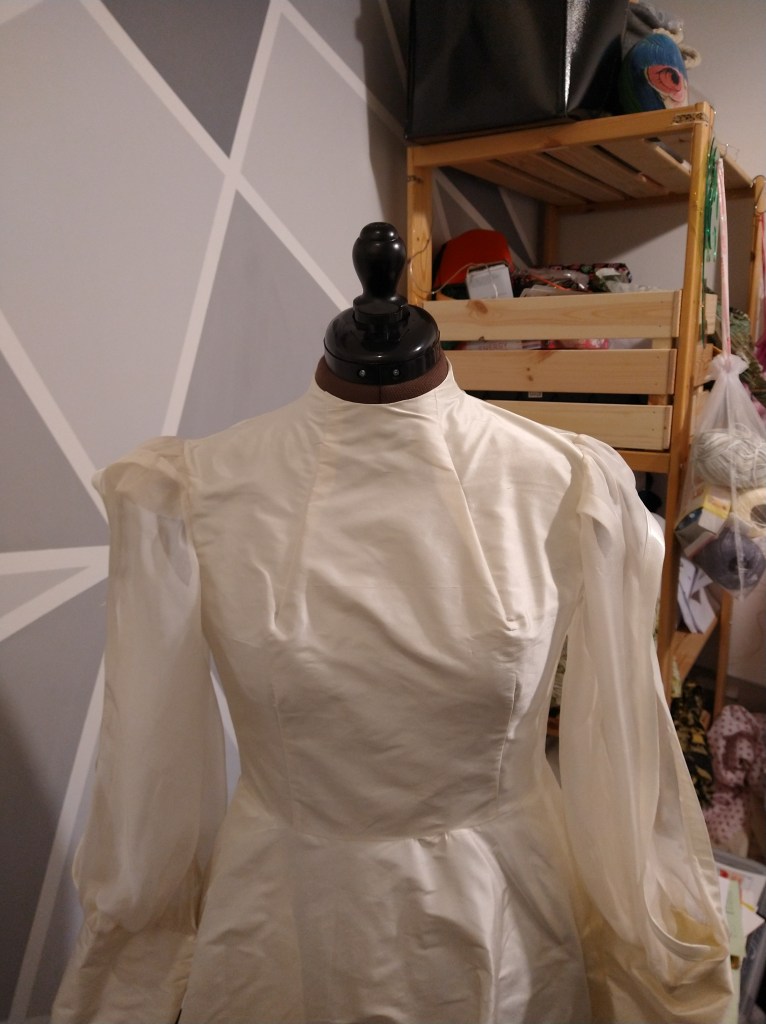
Following the lining, I made the outer bodice and joined the two together along the neckline, this was followed with understitching to ensure that it didn’t roll out. I then tacked the armholes together (with red thread) to ensure that the sleeves would go in well.

The bodice on the dressform with lining and outer fabric tacked together

Sleeves

Where does a queen keep her armies? (Up her sleevies)

Silk chiffon is a beautiful fabric but it is a tricky fabric to sew with, there was another pep talk for this part. I took my time and planned a whole evening to put these in. Red thread was once again used for the basting stitches, to help me to remember to take it out. The bias binding addition was taken slowly, plenty of pins, sew, trim, turn, press, pin, sew. I am pretty happy with the overall finish on these, you can see a little pulling on the chiffon in the picture below but if I hadn’t told you, you would never have known! I french seamed in the sleeves, which took all of my nerve and patience (especially setting them in). I’m not a big fan of setting sleeves in flat, personally I find that it then creates a pull/twist under my arm which drives me mad whilst I’m wearing the garment in question. I definitely didn’t want that on my wedding day!

Slight pulling of the fabric and tacked pleats

Skirt

I did not manage to do the french seams in the skirt 100% correctly, the attachment of the pockets to the waistband and the side seam blew my mind, I didn’t manage to find a tutorial to help (suggestions welcomed). SO, I french seamed the side seams and the pocket individually, did a rolled hem on the part where the pocket opening attached to the skirt and vice versa. Then, I sewed in the pockets by machine/hand in a bodge worthy of a Duck-tape medal. Is it pretty, sort of, did it work? Yes. So I am counting it as a learning curve and a win.

I then attached the bodice to the skirt, using a french seam again. I now had an almost dress, just the back was open and that wasn’t quite the look I was going for. I attached the invisible zip, for which I bought an invisible zip attachment. I would wholeheartedly recommend using an invisible zip attachment to minimise your swearing whilst you sew. I found the linked tutorial from Nina Lee particularly helpful. I also basted in my zip prior to sewing in because it helps it shift less. I then tried the dress on to check that it fit prior to starting the appliques, because it would have been rubbish if I finished it and had to take it in/out/shake it all about.

It fits! So much relief

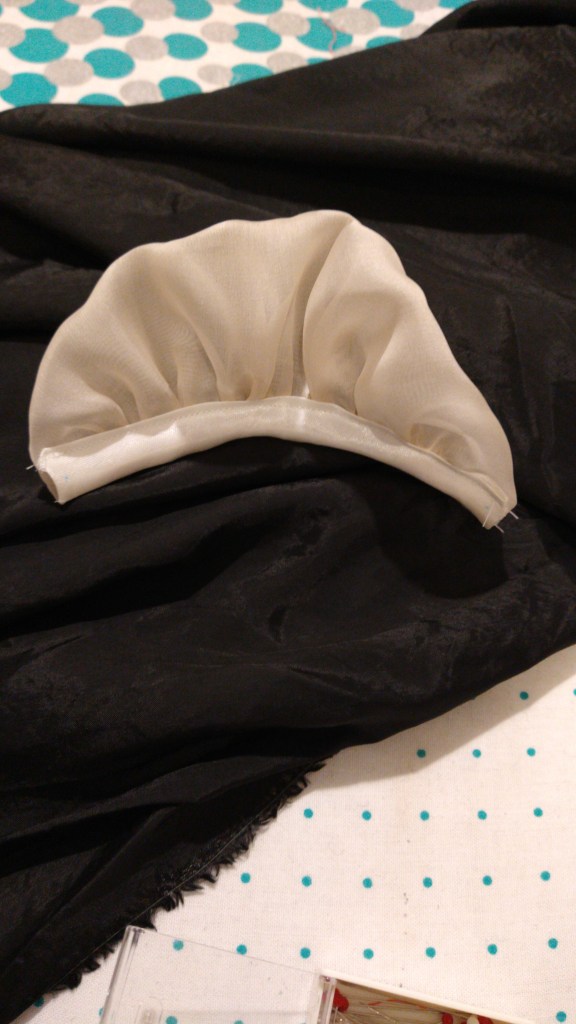
In Blog 1 I mentioned the organza I had purchased to add structure / OOMPH. The sleeves needed a little something to help make them shine and give the big sleeve energy I was hoping to achieve. A while ago I had seen a post from Bella Loves Patterns about the Vita Blouse and dress which is best made in a drapey viscose but needs some sleeve volume. Incredibly helpfully there was a tutorial on how to do sleeve head attachments (which when I showed Jenni we thought it looked like something out of Downton Abbey). I followed this tutorial and it helped to give the sleeves the oomph and structure at the top that I was looking for.

Appliques

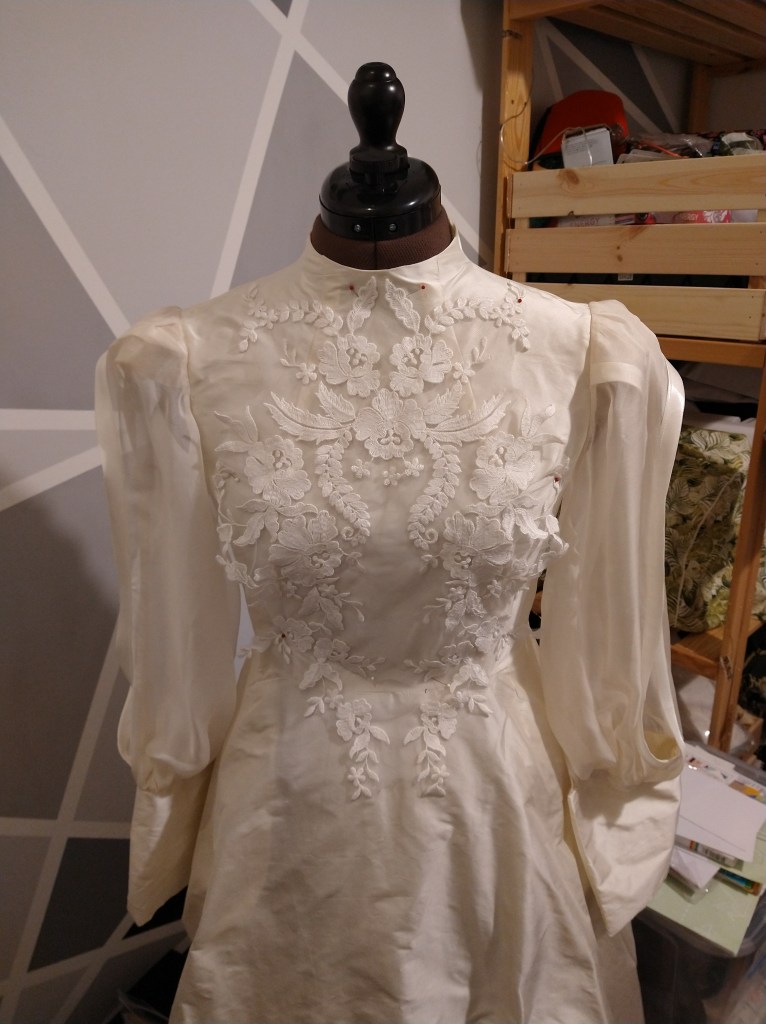
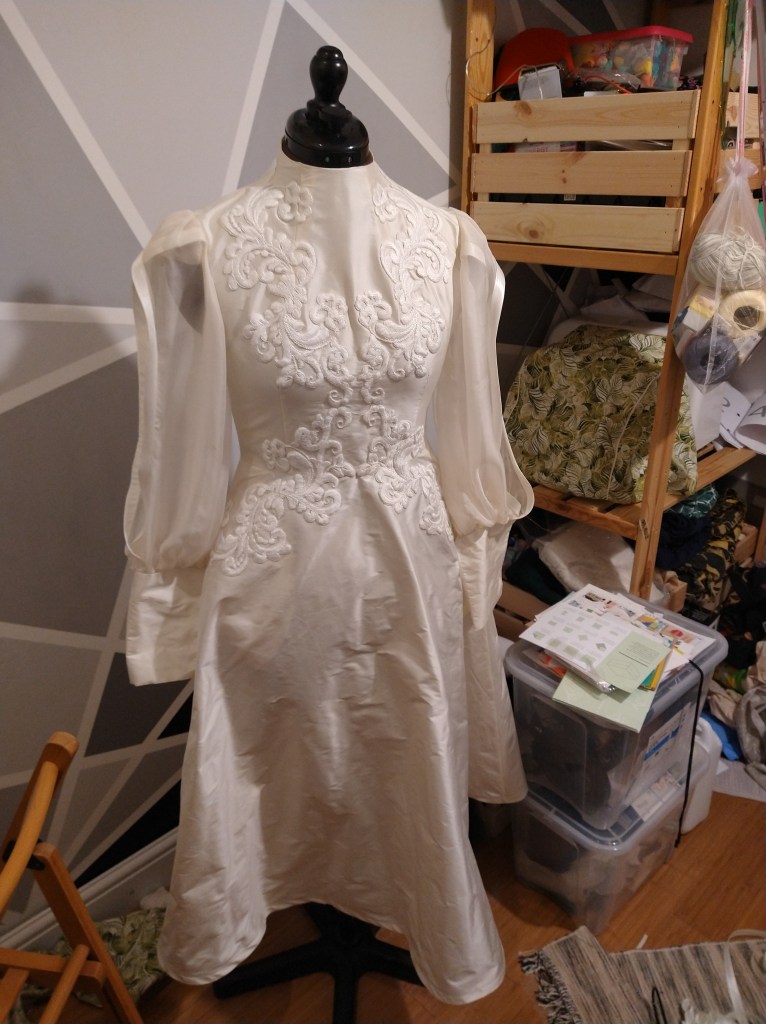
Also in Blog 1 I mentioned that I had got 2 types of applique. These were known as ‘Swirls’ and ‘Flowers’ I pinned both options to the dress to identify which I wanted. I then text multiple people (having already had the idea in my head of which I liked most) to see what the consensus was. I then decided I definitely wanted swirls!

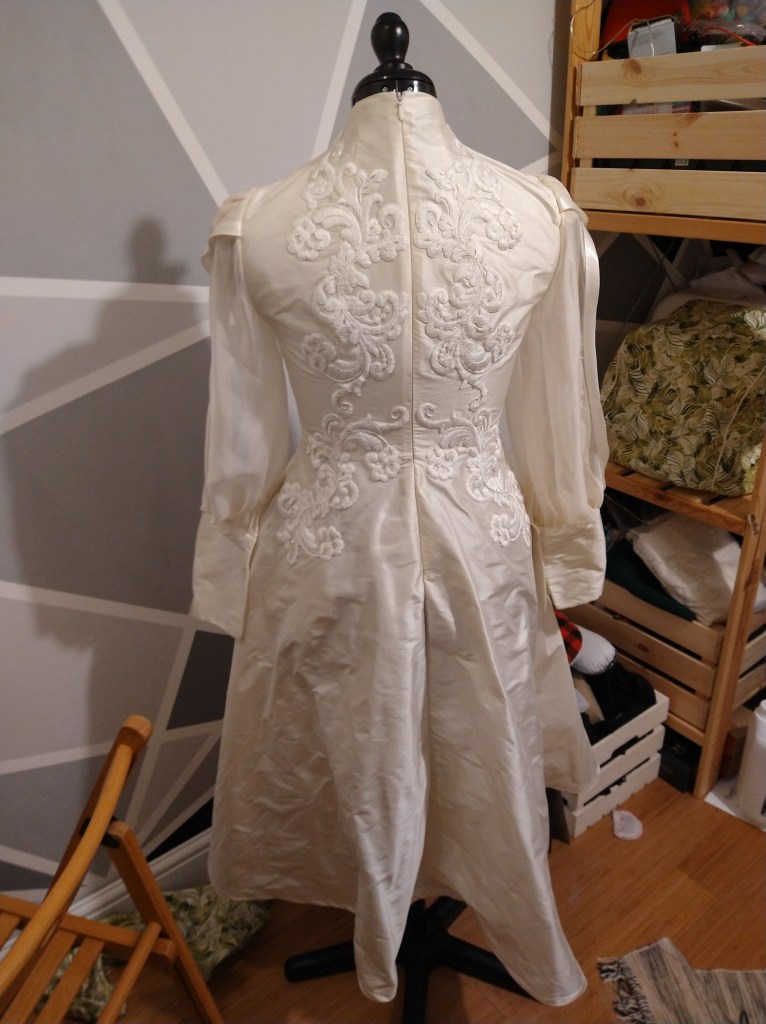
Let the hand stitching marathon begin. I’m going to be real here, this was a labour of love. It took me two weekends of solid ‘working days’ to stitch on these appliques and I did one twice as it wasn’t up to standard. There were a total of 8 appliques (4 front, 4 back). I sat in my sewing room, with the dress on my mannequin (for the back appliques) listening to many an audiobook. Applique pins were incredibly helpful to stop me from stabbing myself. I was also grateful that I had remembered not to sew the bodice lining down yet (also hand stitching) so the attachment would be hidden from the inside.  I also removed all of the mesh post embroidery with a pair of embroidery scissors, which was pretty nerve wracking.

Finishing

The bodice lining was stitched down by hand to a) cover the zip tape and insertion and b) cover the waistline join. This was done to another audiobook session but felt like a breeze compared to the applique attachment.

I finished the hem using bias binding after having previously tried to use the rolled hem attachment to finish it, it looked like I’d had about 8 bottles of prosecco when I used this method. My one slight regret is that I didn’t finish the hem by hand, however, the bias binding gives it a bit of extra flare and structure, and sometimes you have to be practical and realise that if this is your biggest regret on a hand-made wedding dress you’ve done something right.

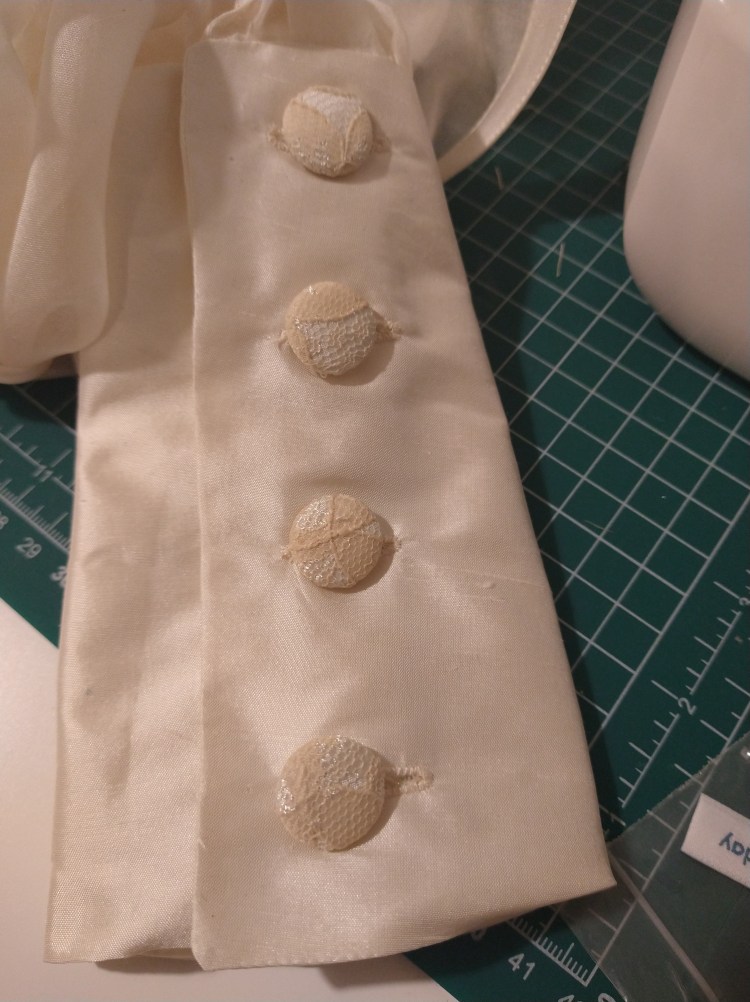
Buttonholes were made on my ‘fancy’ modern machine as the singer doesn’t do them and I don’t have the attachment (yet). I used the silk thread because I had it and it added another level of elevation.

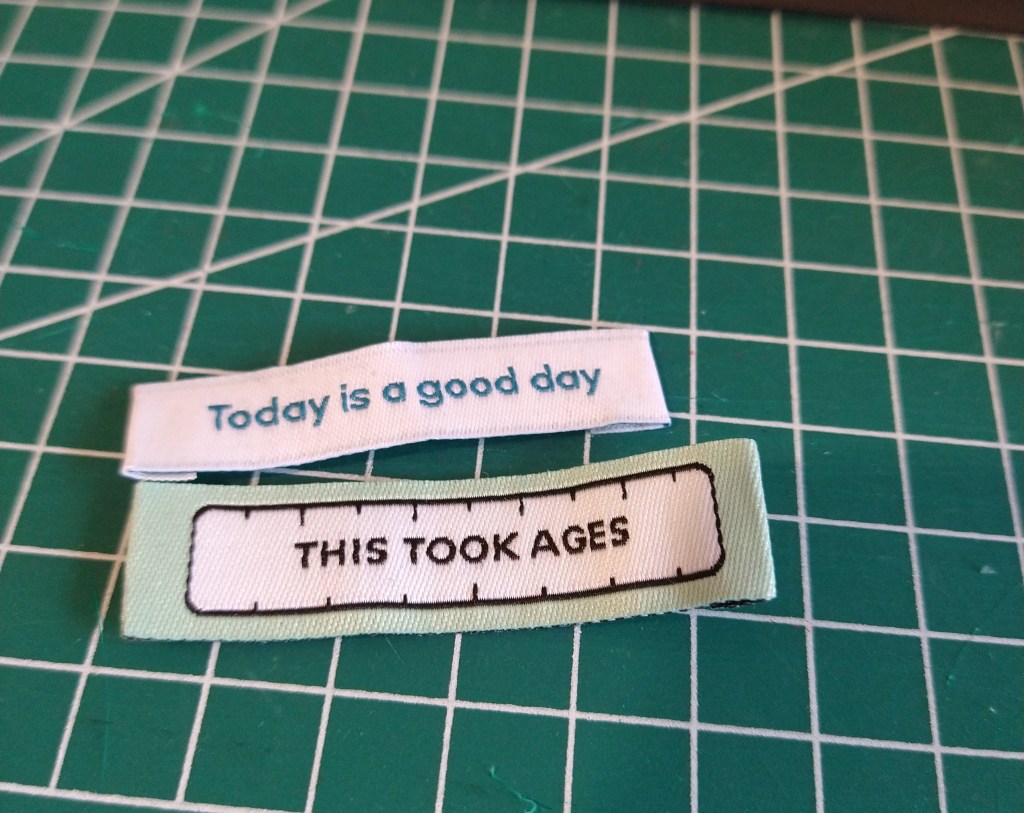
I had previously planned on adding a ‘This took ages’ label (with all the hand stitching, you can see why) however I ended up adding a ‘Today is a good day’ label as I wanted to focus on my day, not the dress construction. I also popped in a label from my school days as I thought it was a cute and personal touch.

Buttons

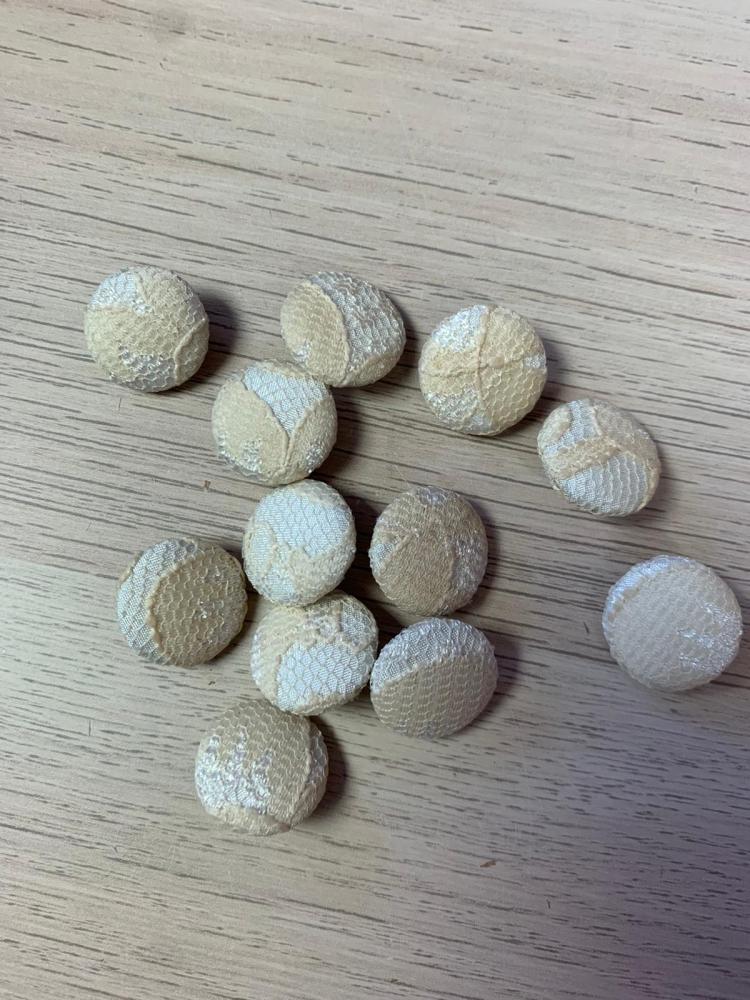
The buttons were made using the silk habotai and lace from Mums dress. Sarah of Like Sew Amazing has a covered button making service and had a thorough consultation with me about the placement of the lace on the buttons to help me get the most visually appealing ones. They are such a beautiful and bespoke element to add to the dress and I’m thrilled that she could help me make them.

Next Up

So, that is the complete construction and a few photos of a dress in dire need of a decent pressing on both me and my dressform. Prior to the wedding I also took the dress in to get dry cleaned, this was to make sure it was presented the best it could be and to get my hand stitching ‘hand grub’ off. My next post is photos, photos and more photos, a few musings on what else I wish I had known prior to starting the process and reflections on the overall success. I hope you have enjoyed reading about the construction and if you have any questions drop a comment below or reach out to me on instagram.

I am thrilled with how this has turned out and I loved every minute of our wedding, knowing that I had made the dress too.